When Your Voice Knows What to Do, Fear Gets Quieter
Stage nerves hit hardest when you feel like your voice might betray you. At home, everything works. Your high notes float out, your breath feels steady, and you think, "This song is mine." Then you step on stage, the lights hit, and suddenly your throat tightens, your breath disappears, and the same notes feel like a cliff.
That shift is not just "in your head." Nerves show up in your body and in your sound. Your shoulders creep up, your jaw locks, your phrases get rushed. This is exactly the space where vocal alignment coaching can make a real difference, because it deals with how your whole body sings, not just how your voice sounds.
At Restore Studios, we work with what we call the Vocal Freedom Formula: Vocal Alignment, Artistic Identity, and Performance Readiness. When your technique is lined up in your body and you know who you are as an artist, your nervous system has less to fight against. As fall performance season rolls in with concerts, worship services, and holiday gigs, this matters even more. The shows are coming. Your body and voice can be ready.
How Stage Nerves Show Up in Your Body and Voice
When you get nervous, your body is trying to protect you, not ruin your song. It might look like:
- Tight neck and shoulders
- Locked knees and a stiff stance
- Shallow, "high" chest breathing
- Dry mouth or trembling hands
- Shaky starts to notes or a wobbly first phrase
None of this means you are a bad singer. It means your body thinks you are under threat, even if the "threat" is just a room full of people staring at you.
Those body shifts usually pull your voice out of balance. You might notice:
- High notes feel strained or thin
- Pitch goes sharp or flat in spots that were easy at home
- You push for volume and feel like you are yelling
- You run out of breath way sooner than you did in practice
- Your vibrato gets wobbly, or you lose it and go stiff
Under stress, your fight or flight response kicks in. Muscles that should stay free start to grip. Your larynx can get yanked higher than it needs to be. Breath and sound stop working together. The good news is, this response is trainable. With awareness and practice, you can teach your body a different pattern so nerves do not have to win.
What a Vocal Alignment Coach Actually Helps You Fix
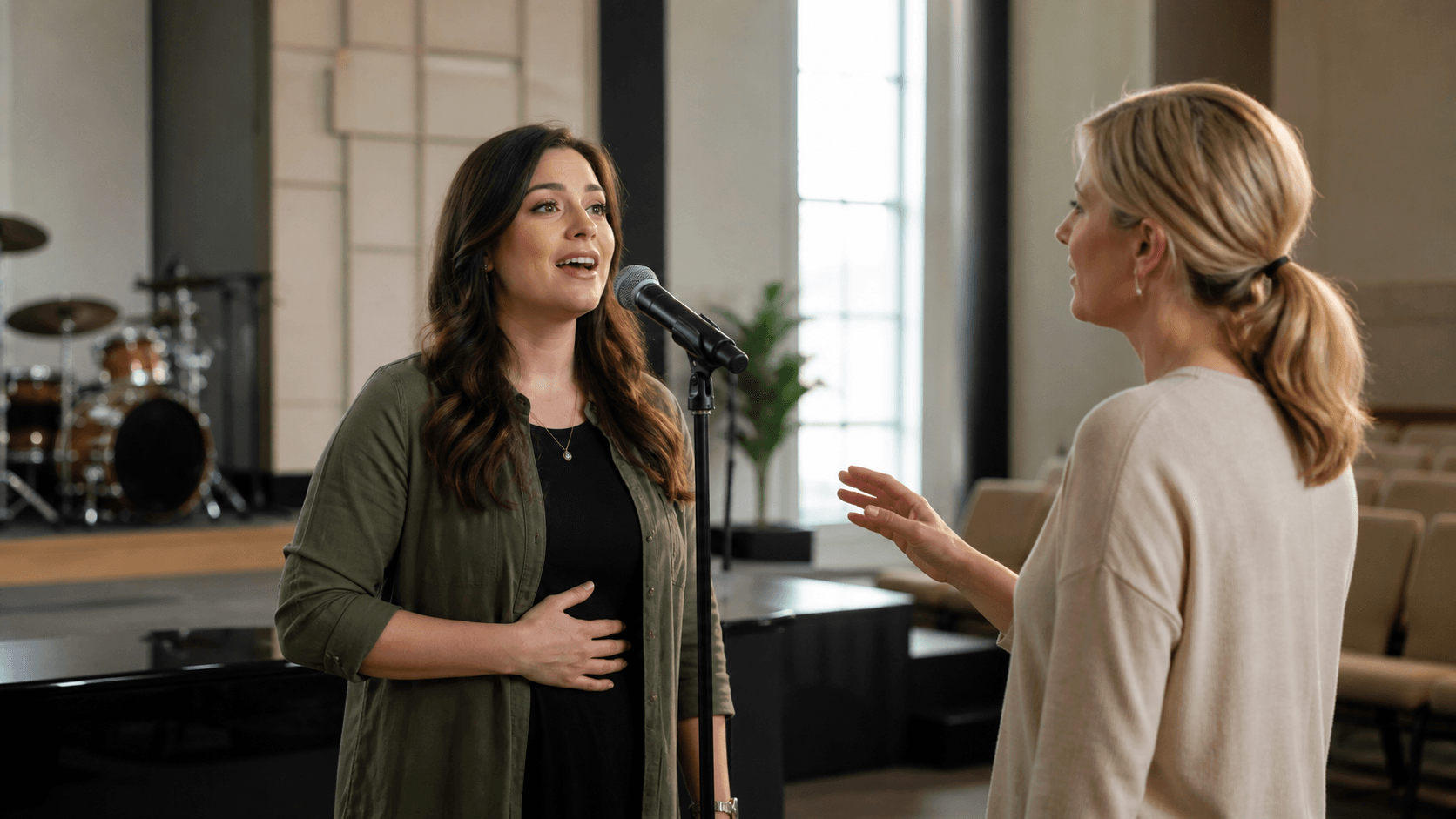
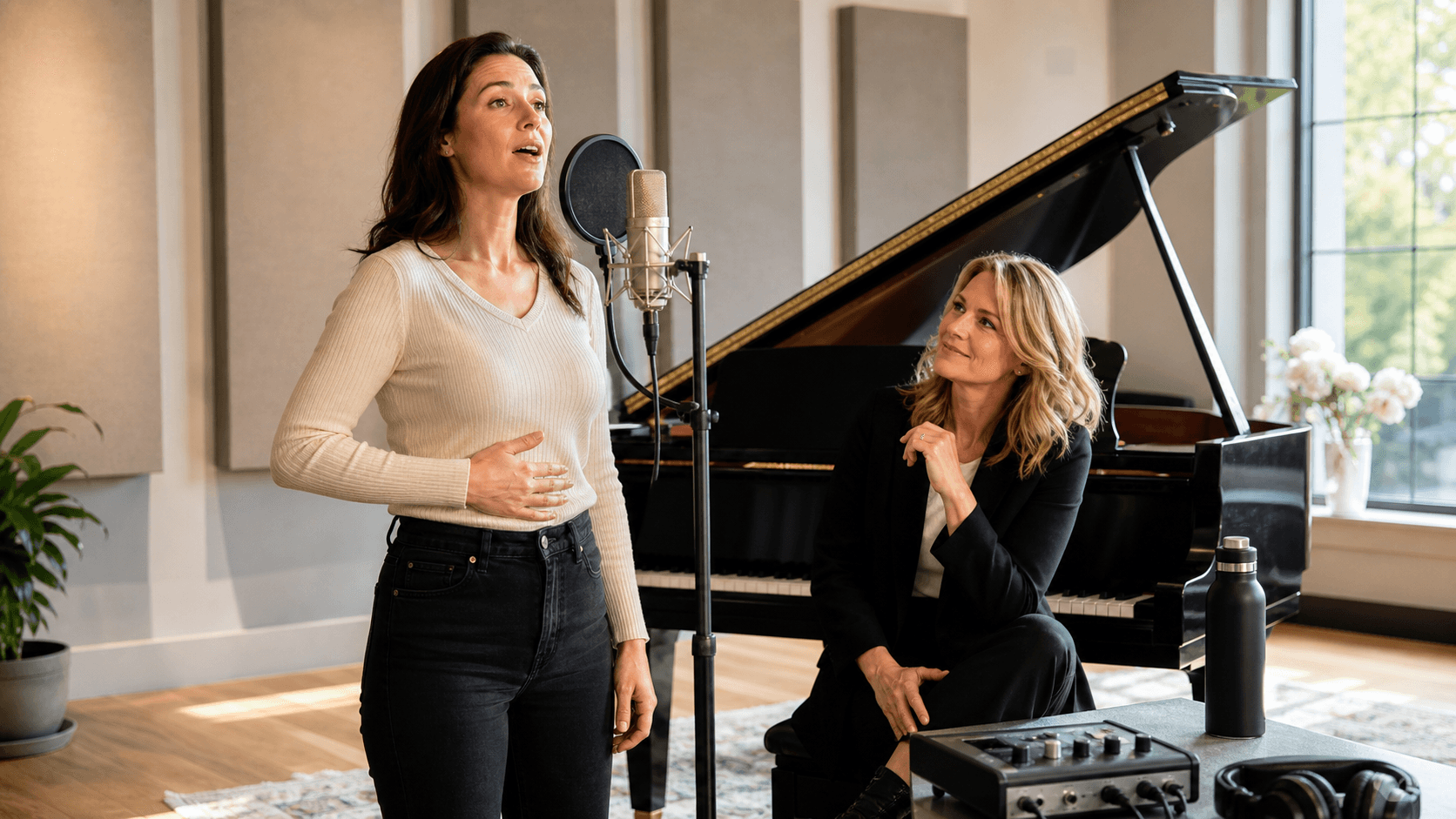
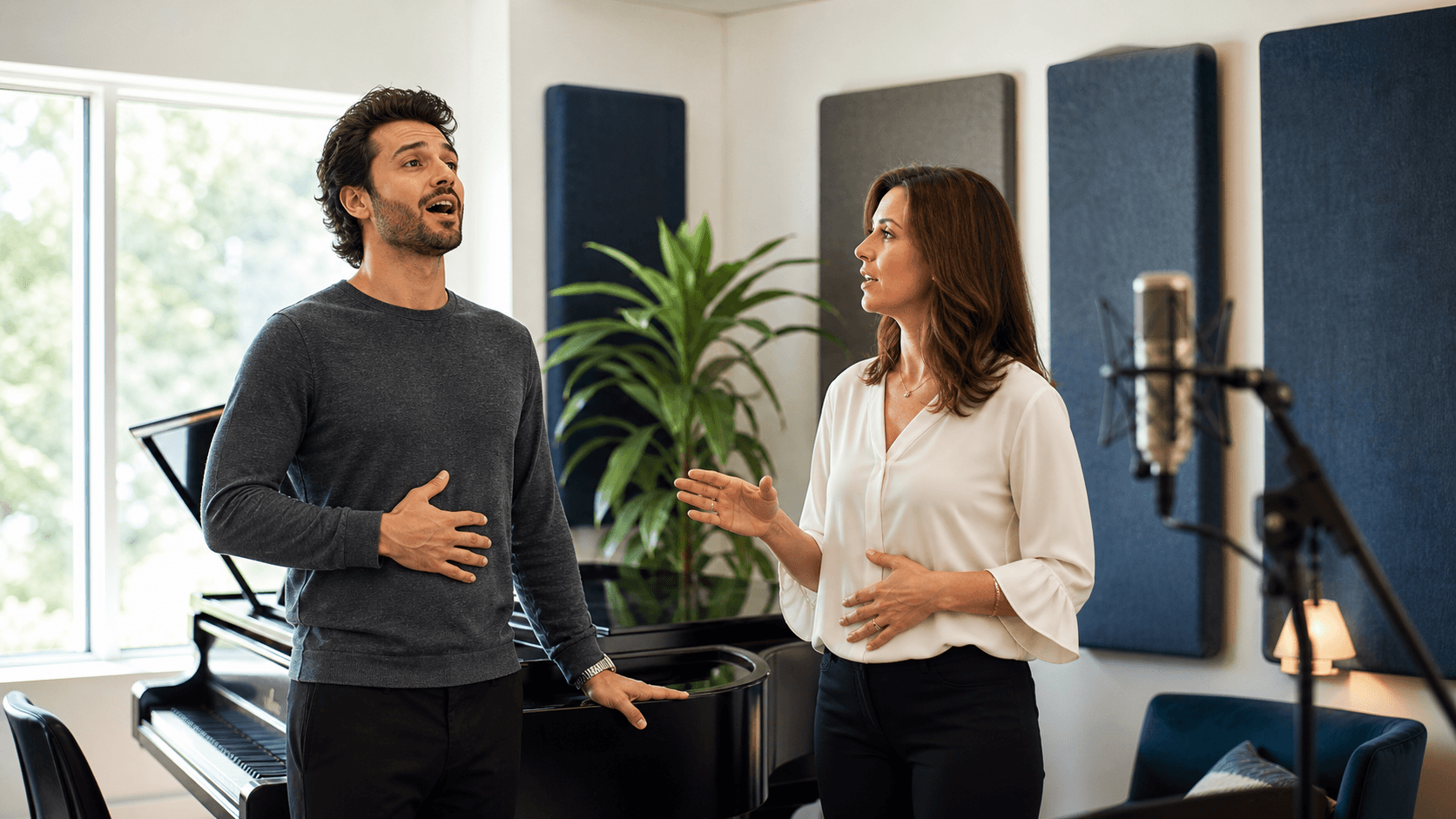
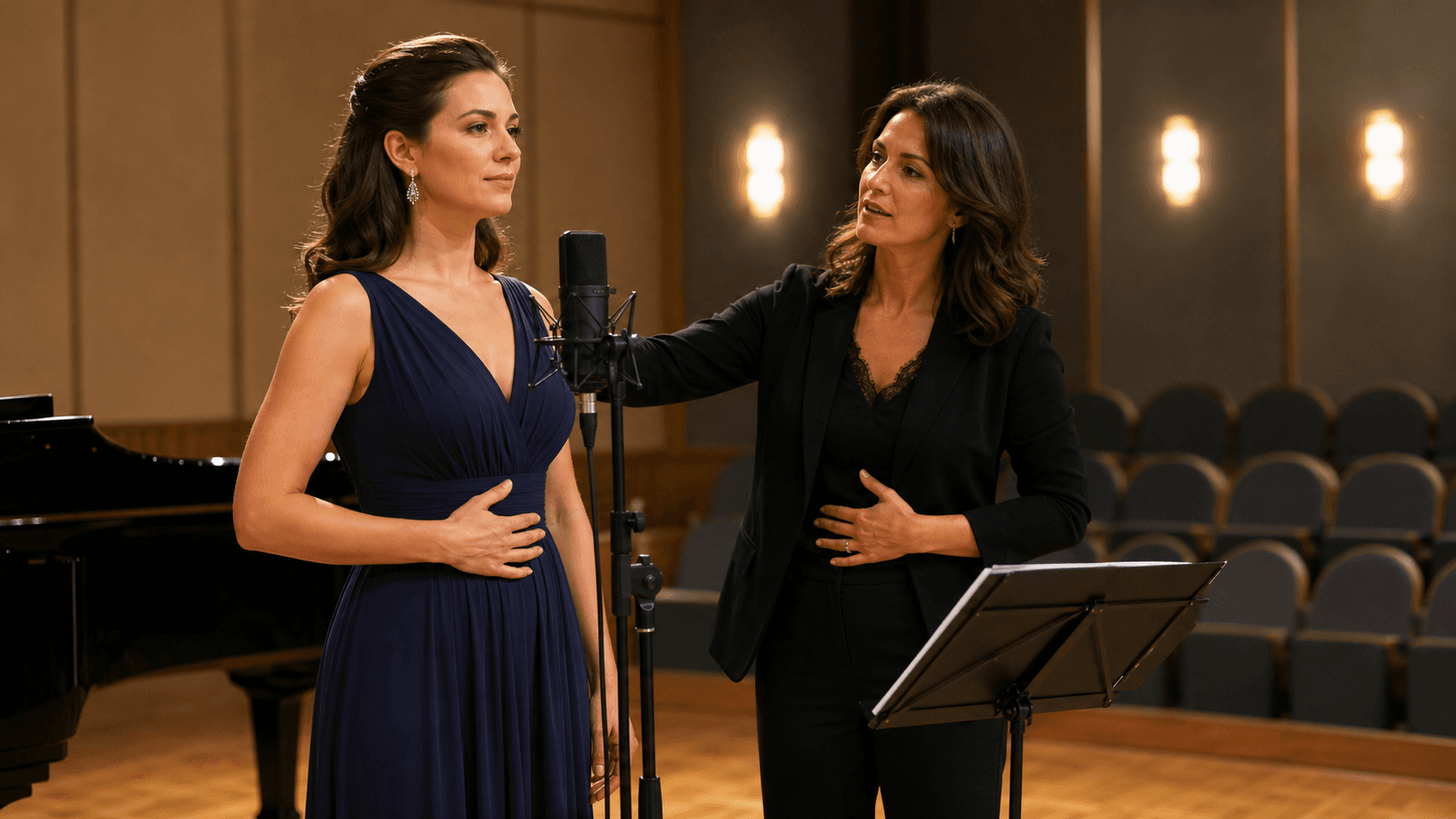
A vocal alignment coach pays attention to how your breath, body, and voice line up in real time. Instead of only chasing range or power, we look at how you are setting up the whole system that creates your sound.
Key parts of vocal alignment include:
- Balanced posture that lets your ribs and belly move with ease
- A jaw and tongue that stay free instead of clamping down
- A larynx that can stay stable yet flexible as you move through your range
- Breath flow that is steady, not stop and start
When these pieces work together, your voice has a "default setting" it can return to, even when you are nervous. Coaching is very practical. We use specific exercises to:
- Release neck and shoulder tension
- Reset where and how you are breathing
- Build a clear sense of what "aligned" actually feels like inside your body
This is very different from just powering through a scary performance or relying only on mental pep talks. Mindset tools are helpful, but they work better when your body is already set up in a way that supports sound. Alignment gives your confidence something solid to stand on.
When Vocal Alignment Coaching Meets Stage Nerves
The real magic happens in the gap between the practice room and the stage. With a vocal alignment coach, you start to notice your early warning signs. Maybe your knees lock, your tongue gets heavy, or your breath jumps up into your shoulders. Instead of panicking, you learn how to reset in the moment.
On stage, that might mean:
- Softening your knees and feeling your feet on the floor
- Taking one slow, low breath while the band vamps or the track counts in
- Releasing your jaw and letting your tongue rest instead of pressing
As you repeat this work, your inner script starts to change. You shift from "I hope this note comes out" to "I know how to create the conditions that usually make this note feel easy." Confidence stops being a mystery and starts feeling like a skill.
When your body is not fighting just to make sound, more space opens for emotion and story. You can connect to lyrics, to the room, to what the song means to you. Stage nerves may still be there, but they turn into energy and focus rather than tightness and strain. With regular work, pre-show jitters become a cue to check your alignment, not a sign that you should hold back.
Bringing Artistic Identity Into Your Performance Nerves
There is another piece to this, and it lives deeper than technique. Artistic identity is the "why" behind your singing. It includes:
- Your values and what you care about
- The styles and sounds you love
- The way you naturally connect with people
When you know who you are on stage, it softens the pull of comparison and perfectionism. You can stop trying to sound like everyone else and start asking, "What am I here to share tonight?"
Artistic identity and vocal alignment support each other. Once your sense of self is clearer, your technical choices feel more grounded. You might choose a warmer tone because it fits the story, or a lighter mix because it matches the joy in the lyric. This focus can quiet some of the mental noise that often gets loud when nerves rise.
A worship leader might lean on service and connection. An indie artist might root into honest storytelling. A hobby singer might center on joy and play. Each one can return to that anchor as the room gets quiet and eyes turn toward them.
At Restore Studios, our holistic approach brings together vocal alignment, artistic identity, and performance readiness. These are not separate buckets. They weave together into a stable frame so your natural nervous energy has somewhere safe to go.
Simple Alignment-Based Habits to Steady You Before a Show
You do not need a long, complex warm-up routine before every performance. In fact, on busy show days or packed worship mornings, simple and clear is best. Here is a short sequence you can learn and repeat:
- Two to three minutes of gentle movement, like rolling shoulders and releasing your neck
- Low, steady breathing where you feel your ribs and belly move, with slow, easy exhales
- A few light, aligned warm-ups that feel kind to your voice, not like a workout
You can add small rituals that help your performance readiness, like:
- A quick body scan backstage to notice any tight spots
- One "reset breath" before you walk on
- Quietly releasing your jaw between songs
- Choosing one alignment cue, like "soft knees" or "wide back," as your anchor for the whole set
These tools work best when they are not brand new on show day. Practicing them ahead of time with guidance from a vocal alignment coach helps them become second nature. As the weather cools, schedules fill, and holiday performances line up, your body can learn to read this little routine as a signal of safety and support.
Your Next Step Toward Calmer, Freer Performances
It can be helpful to pause and name the places where stage nerves show up for you. Do your shoulders lift? Do your high notes feel risky? Do you rush your phrases when you feel watched? When you can see these patterns clearly, you can start working with them through alignment instead of trying to avoid them.
Pick one simple alignment habit from this article and fold it into your home singing, maybe that reset breath, or a soft knee check. Then try it in a low-pressure setting like rehearsal, a small open-mic set, or a weekly worship set. Over time, steady, repeated practice can shift how your body responds when it is your turn to step into the light.
At Restore Studios in the Portland area, we help adult singers build this kind of sustainable change through holistic vocal coaching. Working with a vocal alignment coach can support not only how your voice functions, but also how your artistry and confidence grow together. Stage nerves do not disqualify you from being a powerful, moving singer. When your body, technique, and identity line up, nerves become something you can work with, not a wall between you and the songs you are meant to share.
Unlock Confident, Aligned Vocals For Every Performance
If you are ready to sing with more ease, consistency, and emotional clarity, we are here to guide you. Work with a dedicated vocal alignment coach to address tension, breath support, and resonance so your voice feels balanced and reliable. At Restore Studios, we tailor each session to your goals, whether you are preparing for the studio, the stage, or building long-term vocal health. Take the next step and book your first session so we can start shaping the sound you really want.