What Professional Vocal Training Really Looks Like for Adults
Professional vocal training is not about sounding perfect every time you open your mouth. It is about having a voice you can count on, even when you are tired, busy, or a little nervous. If you are an adult who sings at church, in a band, at local gigs, in the studio, or simply for joy, you deserve training that respects your life and your body.
In this article, we will walk through what professional vocal training really looks like for grown-ups, not kids in a school choir. We will talk about what makes training professional, what happens in a session, how technique should feel, and how to practice in a way that actually fits your season of life, especially as we head into a busy fall of services, events, and performances.
What Makes Vocal Training Professional for Adults
Professional vocal training for adults is not about quick tricks you saw on a short video. It is about building a strong, steady foundation that holds up when life gets real. That means training that works on:
- Long rehearsal days
- Early call times or late-night sets
- Travel, allergies, or weather changes
- Extra services and holiday events
True professional training centers on long-term sustainability. Instead of pushing for high notes at any cost, we work on:
- Breath that supports you without forcing it
- Alignment that lets sound move with less effort
- Resonance that carries your voice without strain
- Coordination between breath, body, and sound
Adult-centered training also respects your schedule. Many singers are juggling full-time jobs, families, and church or performance commitments. A professional approach looks at your calendar and your energy, then builds a practice plan that you can actually keep.
Just as important, professional training is a collaboration, not a command. Instead of a coach saying, "Do it this way because I said so," you should feel:
- Heard in your goals and your style
- Safe to ask questions
- Supported in your values and faith, if that matters to you
- Invited to experiment and problem-solve together
You are not a kid being graded. You are an adult artist, and your voice deserves that level of respect.
Inside a Professional Vocal Training Session
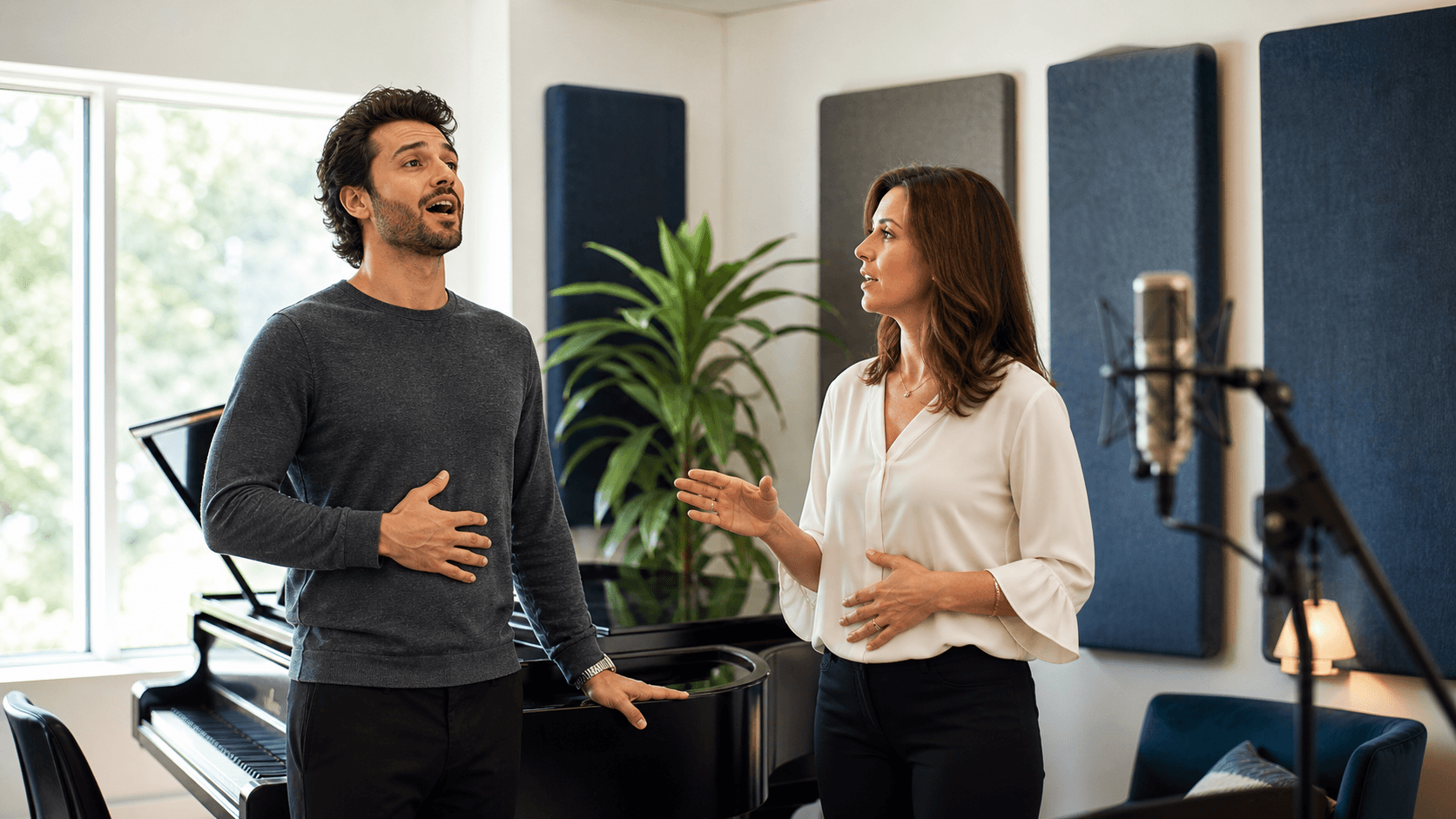
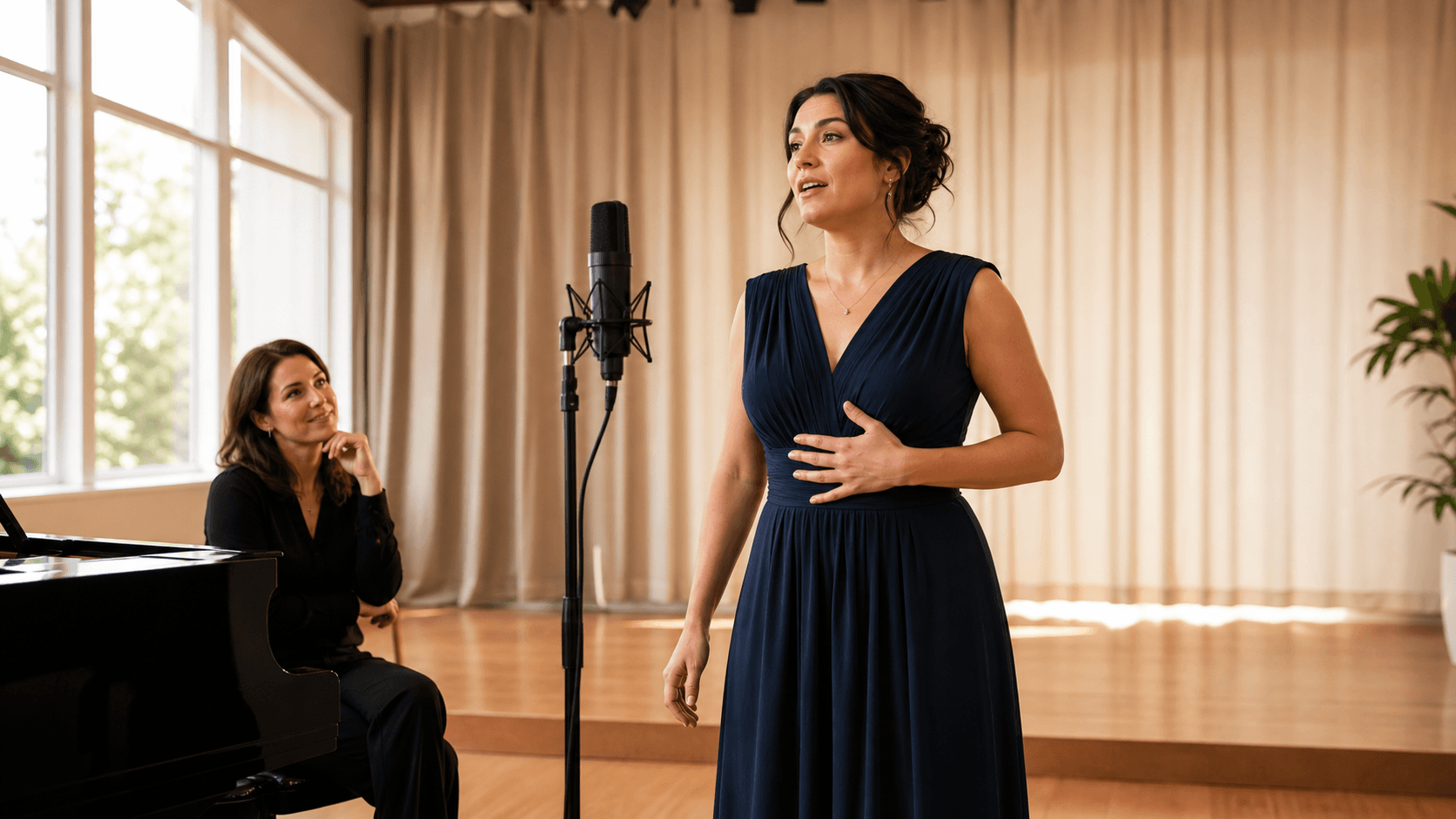
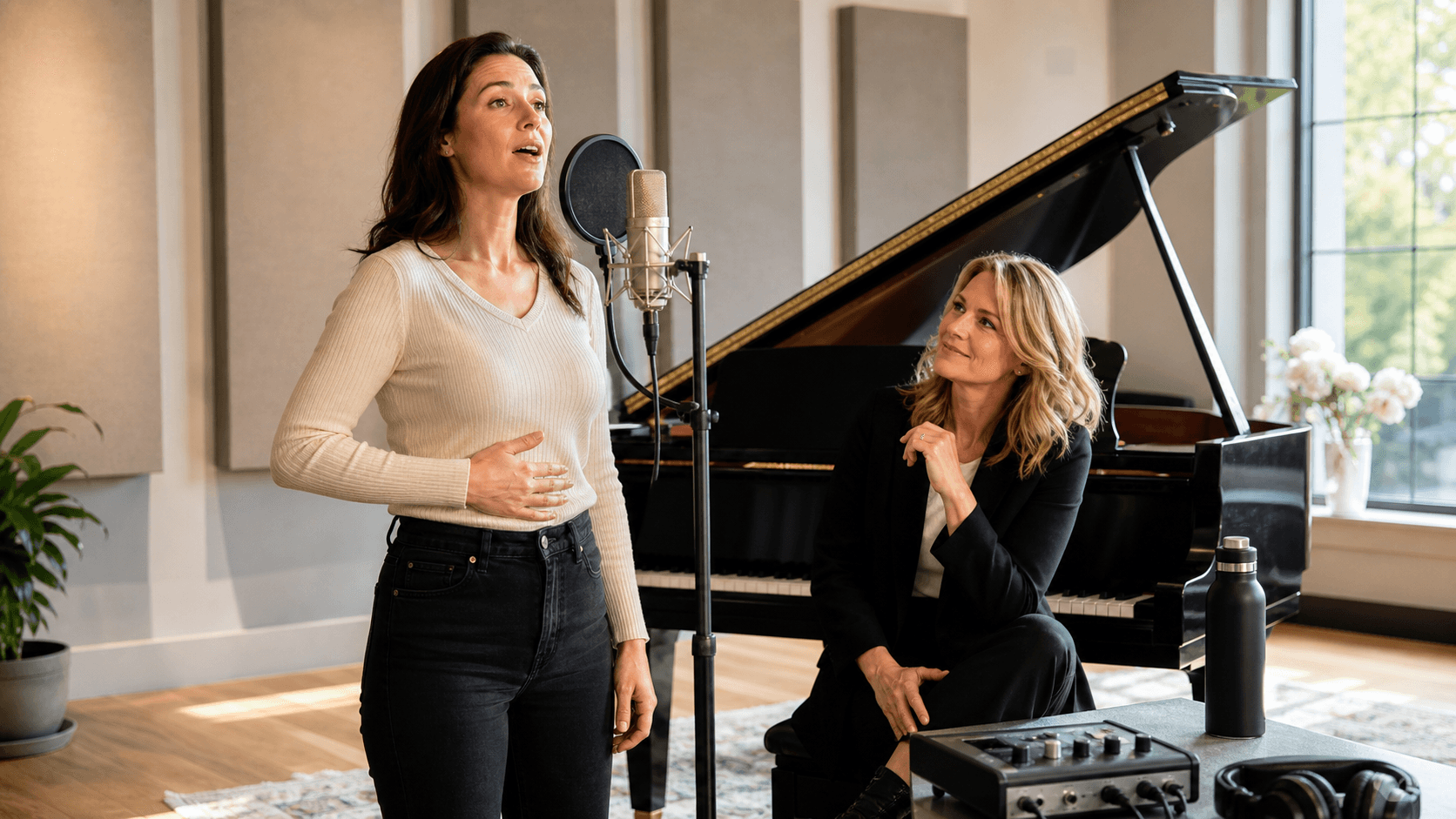
A professional session does not start with blasting high notes. You begin with a gentle reset, so your body and mind are on your side.
That often includes:
- Simple grounding, like noticing your feet on the floor
- Checking posture without getting stiff or "posed"
- Easy breathing so your ribs and belly can move freely
This first part is not therapy and not medical treatment. It is just practical support so your body can actually do what you are asking it to do.
Then you move into targeted warm-ups. These are not random scales. Warm-ups should:
- Match your current range, not someone else's
- Address your habits, like throat tension or breath holding
- Prepare you for what you will sing later in the session
For example, if you lead worship and often sing in that middle-to-high zone for long stretches, your warm-ups should build stamina and flexibility there, not just in the very top of your range.
After that, you plug technique into real songs. This might mean:
- Working through your worship set for Sunday
- Running your audition cut
- Shaping phrasing in your original song
- Practicing a harmony line you keep losing in rehearsal
Professional training always connects back to what you actually sing on stage, in the studio, or in services. Otherwise, it is just theory.
Technique That Supports Your Voice, Not Controls It
Many adult singers worry that technique will make them sound stiff or not like themselves. Professional training should do the opposite. It should support your voice so it feels more like you, not less.
You keep breath and support simple and natural. Instead of complicated rules, you learn cues that still work when you are:
- Holding a mic in one hand
- Moving around a stage or platform
- Leading multiple songs in a row during fall events
Professional work on power and range is also steady and kind. No yelling. No "just push harder." The focus is on:
- Building strength over time, not in one session
- Sharing the workload between breath, body, and vocal folds
- Finding mix qualities that let you sing higher without strain
Most importantly, you keep your unique sound. Technique is not about copying a famous singer. It is about clearing away extra tension so your tone can ring out more freely. You should come away feeling like a more confident version of yourself, not like you are trying to wear someone else's voice.
Building Confidence, Expression, and Stage Readiness
Professional vocal training is not only about notes, and it is about how you feel on stage or in front of a room. Many adult singers experience things like:
- Shaky hands when they hold a mic
- Worrying about one big note all day
- Feeling "on the spot" when asked to lead
So you practice those moments in the studio. That might look like:
- Holding a mic while you sing, so it feels normal
- Pretending the backing track stopped, then recovering calmly
- Running through a worship set with small talk between songs
You can also use simple tools for nerves and inconsistent days, such as:
- Pre-song breathing or grounding
- Gentle vocal resets when you feel tight
- Setting realistic expectations for a tired voice
When technique is in place, your brain can shift from "Will I crack?" to "What am I saying with this lyric?" For worship leaders, this means more focus on leading people, not on managing worry about your sound.
What Sustainable Practice Really Looks Like for Adults
A professional practice plan for adults does not expect you to lock yourself in a room for hours. It favors short, focused sessions you can repeat.
A realistic rhythm might be:
- 10 to 20 minutes of focused practice most days
- One slightly longer run-through when your schedule allows
- Planned vocal rest on heavy singing days
As fall schedules fill up with rehearsals, services, school events, and work, you can also plan your voice care by season. That might mean:
- Adding extra warm-up time before long sets
- Building in cool-downs after big Sundays or shows
- Adjusting practice when allergies or weather shifts kick in
Caring for your whole self is part of singing well. Helpful vocal training respects:
- Sleep and recovery
- Hydration through the day, not just right before you sing
- Gentle movement so your body does not feel locked up
- Mental focus, so you are not dragging all your stress into your sound
When your life, body, and voice are working together, you are far less likely to burn out, vocally or emotionally.
Taking the Next Brave Step with Your Voice
If you feel like your voice has more to give, or you want greater consistency and confidence, that does not mean you are behind or that you missed your chance. It usually just means you have been trying to piece things together from random tips, instead of having clear, professional support that fits your actual life as an adult.
Professional vocal training for adults can help you protect your instrument, grow your confidence, and sing with more freedom and honesty as your schedule fills up this fall. However you choose to move forward, on your own, with a coach, or in a group setting, you deserve tools that are sustainable, respectful of your whole life, and tailored to the singer you are right now.
Unlock Your Best Sound With Expert Coaching Today
If you are ready to refine your technique and build lasting confidence in your voice, we are here to guide you every step of the way. At Restore Studios, our coaches customize each session around your goals, experience level, and musical style. Explore our professional vocal training options to find the right fit for your voice and schedule. Take the next step today so your voice can perform with clarity, strength, and consistency.