From Stage Nerves to a Steady Worship Voice
Performance anxiety can sneak up on even the most faithful worship leader. One moment you feel ready, the next your heart is racing, your throat is dry, and you are wondering how you will get through that big chorus or the quiet prayer at the end of the set. This is common and very human, especially when you carry a lot on your plate.
Many worship leaders are juggling Sunday sets, midweek rehearsals, family life, work, and ongoing ministry demands. As church calendars fill up with fall kickoffs, conferences, retreats, and early holiday planning, the pressure on your voice and your mind can grow fast. In this article, we will talk about how a performance anxiety coach can support you, how the Vocal Freedom Formula gives you a holistic path forward, and simple tools you can start using right away to feel more grounded when you lead.
Why Worship Leaders Feel Unique Vocal Pressure
Worship leaders are not just singers. You are guiding people spiritually while also managing music, tech, keys, and team dynamics. You might be thinking about lyrics, transitions, who is leading what, and how to respond if the room shifts in a tender moment.
That is a lot for one nervous system. It is no wonder performance anxiety can show up as:
- Shaky voice or pitch that wobbles on important lines
- Dry mouth or tight throat, especially on high notes
- Racing thoughts and overthinking every little vocal choice
- Dreading solos, spoken moments, or spontaneous prayers
On top of this, spiritual expectations can turn up the volume on self-criticism. Many leaders worry about being a distraction, sounding too showy, or not sounding "anointed enough." It is easy to compare yourself to other worship leaders or studio recordings and feel like you are falling short. That inner pressure often shows up as real tension in the body and the voice.
In our Vocal Freedom Formula, we talk about three big areas that affect this:
- Vocal Alignment: Is your body, breath, and voice working together, or fighting each other?
- Artistic Identity: Do you know your own voice, or are you trying to sound like someone else?
- Performance Readiness: Do you have clear habits that help you feel prepared, not panicked?
When these are out of line, anxiety usually climbs and vocal consistency drops. When they come into better balance, your voice becomes more steady and your mind can rest.
How a Performance Anxiety Coach Supports Your Voice
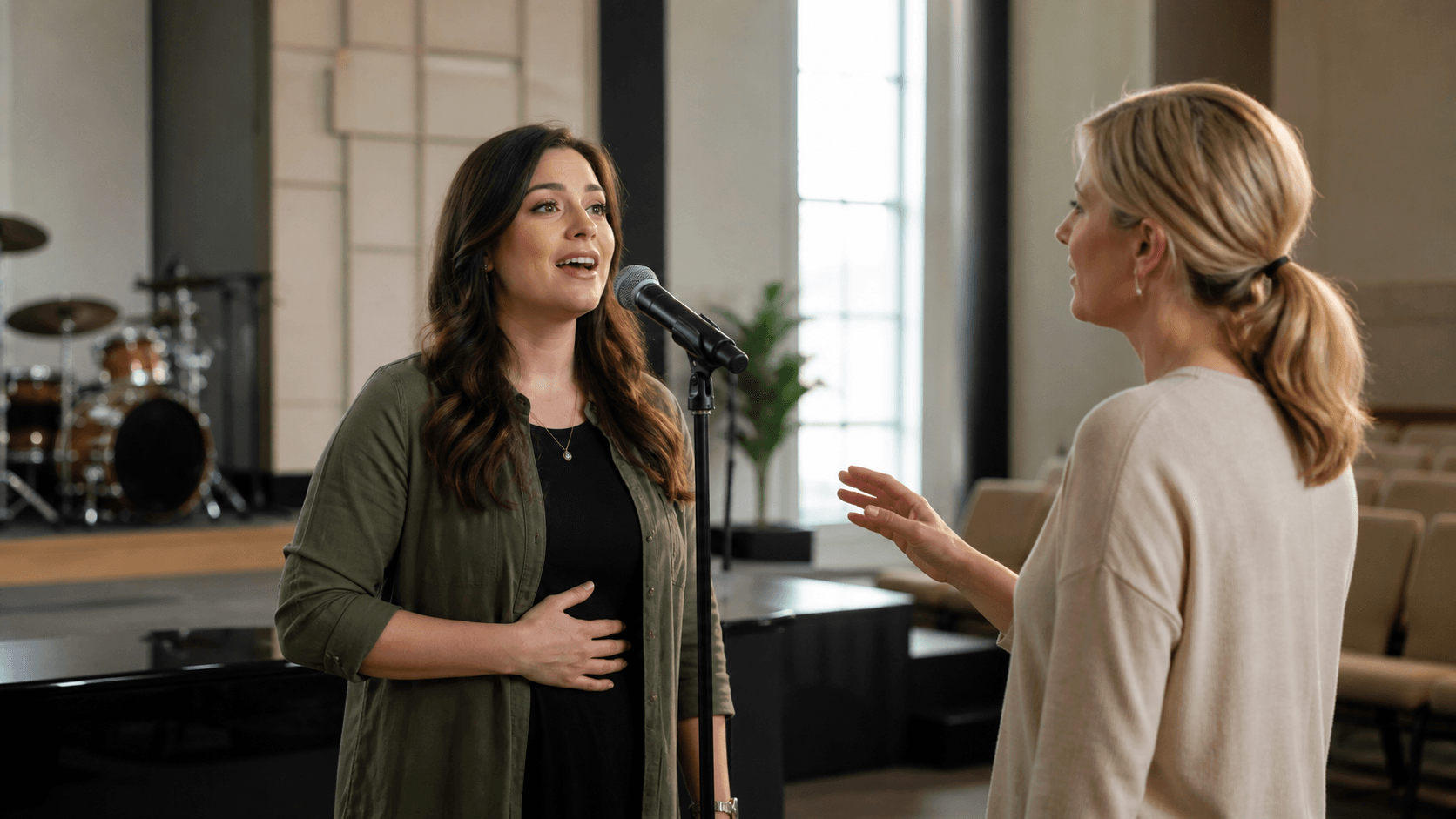
A performance anxiety coach for singers is not a therapist or a doctor. Instead, this kind of support is very practical and voice-focused. The goal is to help you understand what is happening in your body and mind, then give you tools that work in real worship settings.
We look at three main areas at once:
- Body and breath
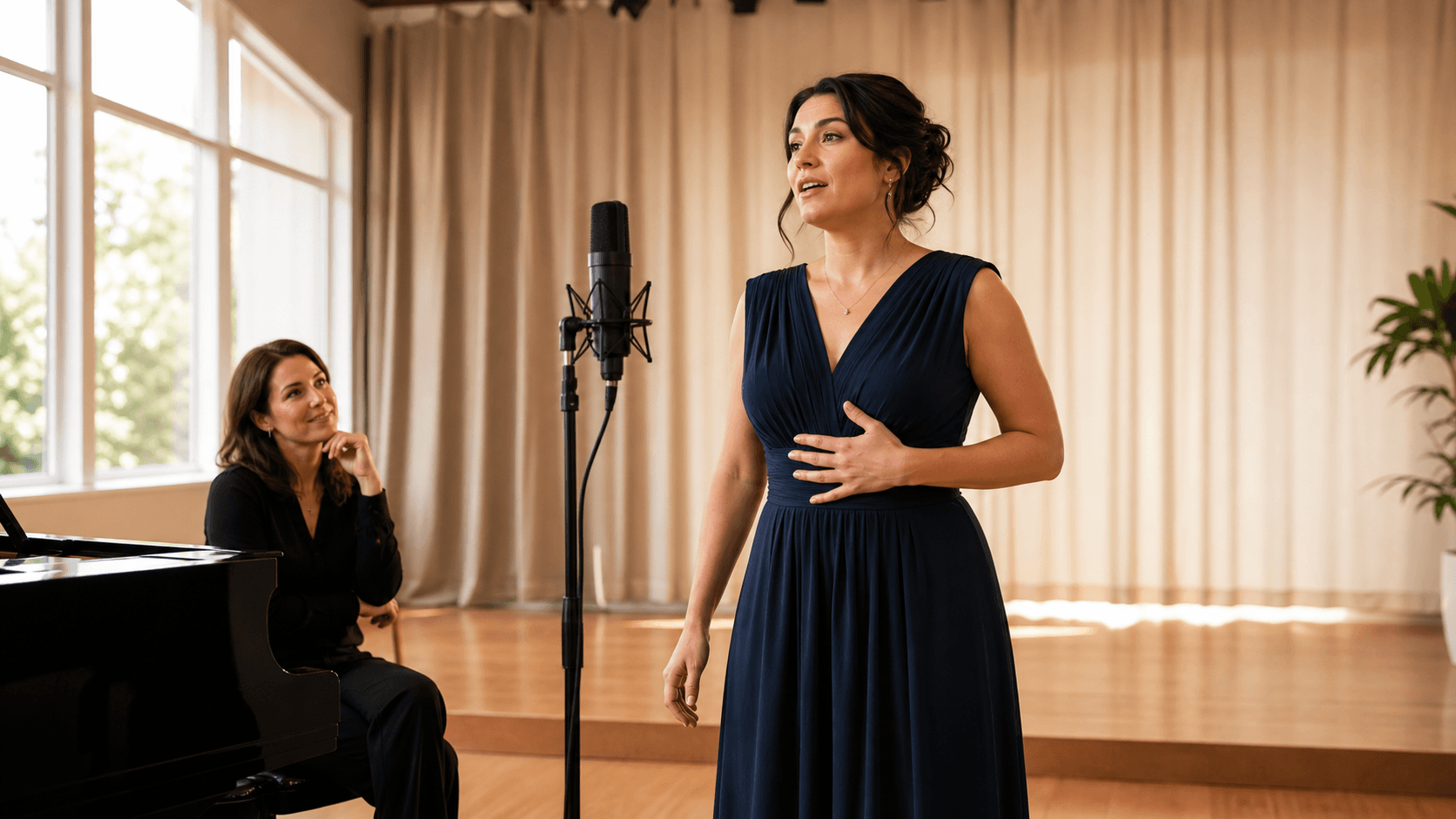
A coach can guide you through grounding techniques, simple movement, and breathing that calms your system instead of revving it up. You learn warm-ups that do more than "get you loose"; they lower tension and help your speaking voice and singing voice feel connected.
- Thoughts and focus
Performance anxiety often feeds on perfectionism and fear of judgment. Coaching helps you gently shift from "prove yourself" to "serve and connect." Together, you can build pre-service mental routines so you are not just hoping to feel calm, you are training your focus on purpose.
- Vocal choices
Sometimes the anxiety is not "in your head," it is in the set list. Keys that are too high, songs stacked in your most tiring range, or too many heavy songs in a row can wear you out. A coach can help you choose keys that match your real voice, plan sets around your stamina, and pace your voice across multiple services.
At Restore Studios, performance anxiety work is woven into the Vocal Freedom Formula, so you are not only coping with nerves. You are building long-term vocal health, deeper artistry, and more stable confidence as a worship leader.
Practical Mind, Body, Voice Tools for Sunday Mornings
Let us make this concrete. Here is a simple pre-service routine built around Vocal Alignment that many worship leaders find helpful:
Before rehearsal or soundcheck:
- Gentle stretches through neck, shoulders, and sides
- Easy jaw and tongue release, like slow chewing or gentle tongue rolls
- Low and slow belly breathing for a minute or two
- A short, targeted warm-up that starts in a speaking range, then moves into your chorus range
This kind of routine helps both your speaking and singing, so your voice is ready for welcome moments, prayers, and big choruses without strain.
For your mindset and focus, try:
- A quick 5 senses check-in: name something you can see, hear, feel, smell, and taste
- A steady breath count: in for 4, out for 6, a few times in a row
- A centering phrase or prayer, like "I am here to serve, not to perform"
For busy seasons like fall and early holiday prep, performance readiness also means planning outside of Sunday:
- Build "rest pockets" into your week, even if it is just a quiet evening without heavy talking
- Rotate songs that sit in different parts of your range so you are not always living at the top
- Be honest with yourself about high-demand Sundays and prepare extra margin
- Communicate clearly with your team about keys, harmonies, and speaking moments to cut down on last-minute stress
None of this has to take a long time. The point is to be intentional, not frantic.
Growing Your Artistic Identity as a Worship Leader
Performance anxiety often softens when you feel clear about who you are as a worship leader. When you know your strengths, your natural tone, and your favorite ways to connect with your church, you are less tempted to copy other voices and more able to stand in your own.
A holistic vocal coach or performance anxiety coach can help you explore:
- Your natural tone and where your voice feels most free
- Your ideal tessitura, the range you could sing in all day without getting worn out
- Styles that feel like home for you, whether that is gospel, CCM, acoustic, or something else
- How you like to connect with your congregation through both speaking and singing
You can also try a few simple Artistic Identity exercises on your own:
- Journal about worship leading moments where you felt the most peaceful or connected
- Track which songs feel most "like you" and which ones feel forced
- Notice where in your range your voice feels open and easy
- Slowly shape your set lists to match your strengths, not just what you think you "should" sound like
This is a big part of the Vocal Freedom Formula: we aim for freedom, not perfection. When your voice and your identity line up, there is more room for authentic worship and less room for anxiety to run the show.
Stepping Into the Next Season with Vocal Freedom
As the weather cools and church life ramps up, you do not have to just push through with a tight throat and a racing heart. You can choose to care for your voice, your mind, and your calling in new ways. Small shifts now can help you move into the heavy holiday weeks with more ease, not just more effort.
At Restore Studios, we meet many worship leaders who think their anxiety means they are not called or not strong enough. We want you to know that performance anxiety is common and workable. With the right support, a performance anxiety coach, and a clear framework like the Vocal Freedom Formula, you can grow in Vocal Alignment, Artistic Identity, and Performance Readiness. Your voice is worth caring for, and confident, authentic worship leading is a learnable, sustainable practice.
Overcome Performance Anxiety And Perform With Confidence
If you are ready to stop letting nerves hold you back, we are here to help you build calm, consistent confidence on stage and in high-pressure moments. At Restore Studios, we work with you to understand your triggers and create a practical, personalized plan for change. Connect with a dedicated performance anxiety coach and start turning performance stress into focused, reliable presence. Take the next step today so your preparation and talent can finally show when it matters most.