Unlocking a Freer Voice All Year Long
Vocal warm-ups help, but they are not the whole story; many singers hit late summer feeling worn out from gigs, worship sets, travel, or long rehearsals, even though they have been faithful with scales and sirens. If you keep doing the same routine and still feel stuck, tight, or unsure what voice will show up, something deeper is going on.
At Restore Studios, we call that missing piece, vocal freedom. Vocal freedom means your voice feels easy, steady, and expressive most days, not just on the rare "good voice" days. It is the mix of ease, consistency, and confidence across your range, so you can focus on the message instead of wrestling with your throat.
Warm-ups are one piece of that, but they cannot carry everything by themselves. Your body, breath, mindset, and performance habits all play a role. That is why our Vocal Freedom Formula starts with vocal alignment coaching, then supports it with mindset and performance work so your voice feels like it actually belongs to you.
Why Warm-Ups Alone Are Not Enough
Warm-ups are like stretching before a run. They wake things up, increase blood flow, and help your voice coordinate. Simple patterns, sirens, and lip trills can:
- Gently bring your vocal folds together
- Warm up your breathing muscles
- Help your ear and voice connect
- Prepare you for more intense singing
But if deeper patterns are off, warm-ups only go so far. You might still notice:
- Cracks or flips on certain notes every single time
- Tiredness after a set, even when you "sang correctly"
- A tight neck or jaw, especially on high or loud phrases
- Your voice feeling different from day to day for no clear reason
These issues often come from misalignment in your body, breath, and vocal setup. For example, if you lift your chin on every high note, your neck muscles grab and your sound strains. If you push air hard at the start of phrases, your voice may crack, no matter how many scales you run.
A vocal alignment coach helps you spot these patterns and gently re-train them. There is nothing "broken" about your voice. You are not behind. You just need more than repeating the same five-note scale and hoping for a different result.
What Vocal Alignment Really Means for Your Voice
Vocal alignment sounds fancy, but it is simple. It is how your posture, breath, larynx, tongue, jaw, and resonance are working together, or fighting each other, when you sing.
We look at three main areas:
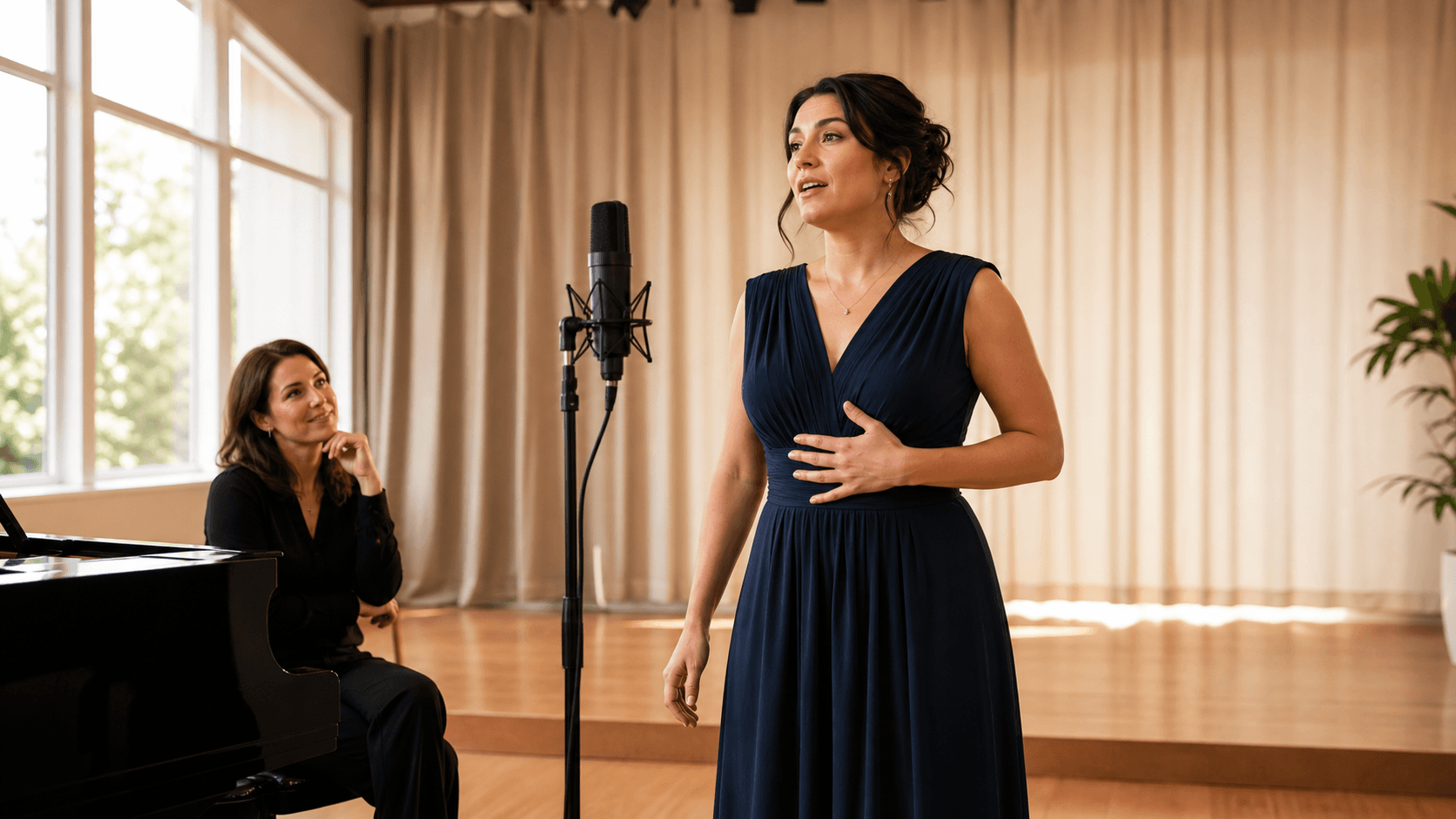
- Body balance: Are you grounded, or are you locking your knees, gripping your shoulders, or jutting your chin forward?
- Breath balance: Is your airflow steady and supported, or do you push too hard or let all the air rush out at the start of the phrase?
- Sound balance: Does your tone feel even from low to high, or do you feel a "cliff" between chest and head voice?
Think about what happens when you reach for a big high note. Many singers:
- Tighten the neck and lift the chin
- Clamp the jaw on vowels like "ee" or "ay"
- Hold their breath, then shove air to "hit" the note
Alignment work helps your body find a new pattern. Instead of your neck pulling, your ribs support. Instead of your tongue and jaw locking, they stay loose and clear the path for sound. Instead of dumping air at the start of a phrase, you release breath smoothly and let the voice ride on it.
This physical freedom leads to emotional freedom. When your setup is steady and your voice responds most days, you are able to think less about "Will this note work?" and more about "What do I want to say here?" That shift is where real artistry grows.
Inside a Session with a Vocal Alignment Coach
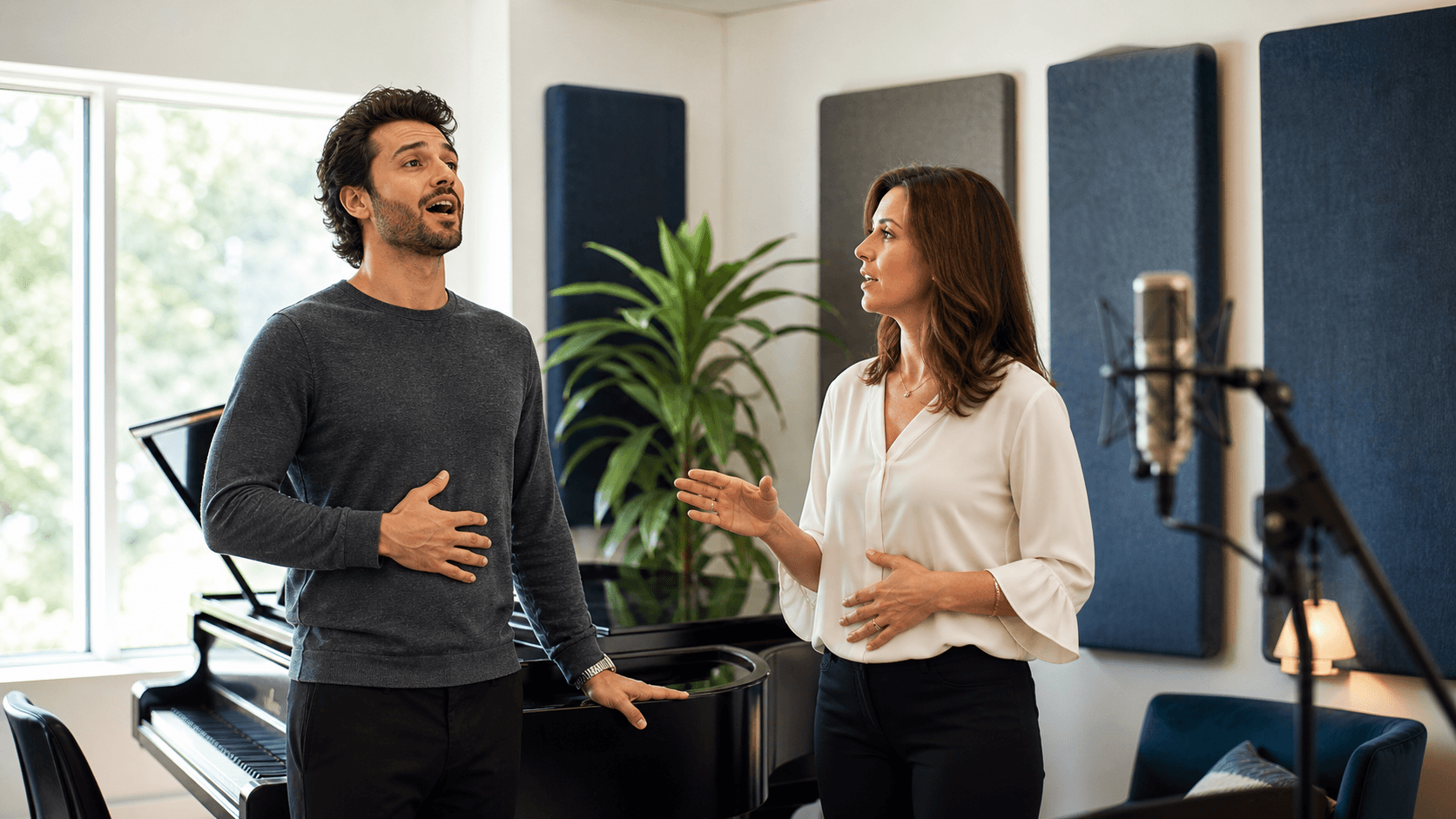
So what actually happens with a vocal alignment coach at Restore Studios? It is not just running scales for 30 minutes while someone nods. Sessions are personal, gentle, and practical.
We usually start with conversation. We ask about:
- Your singing life right now
- Where you feel stuck or tense
- What kind of songs and settings you sing in
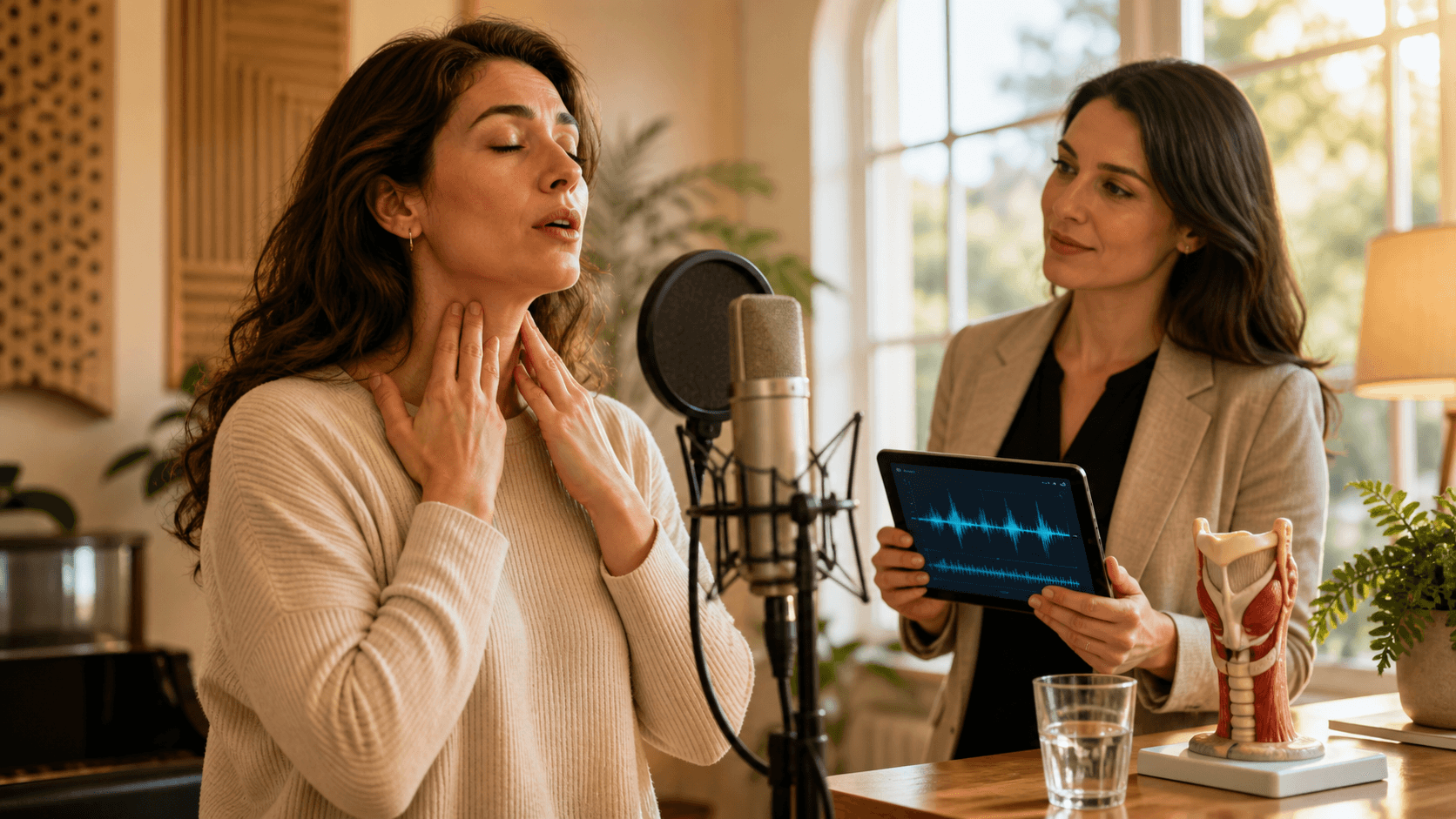
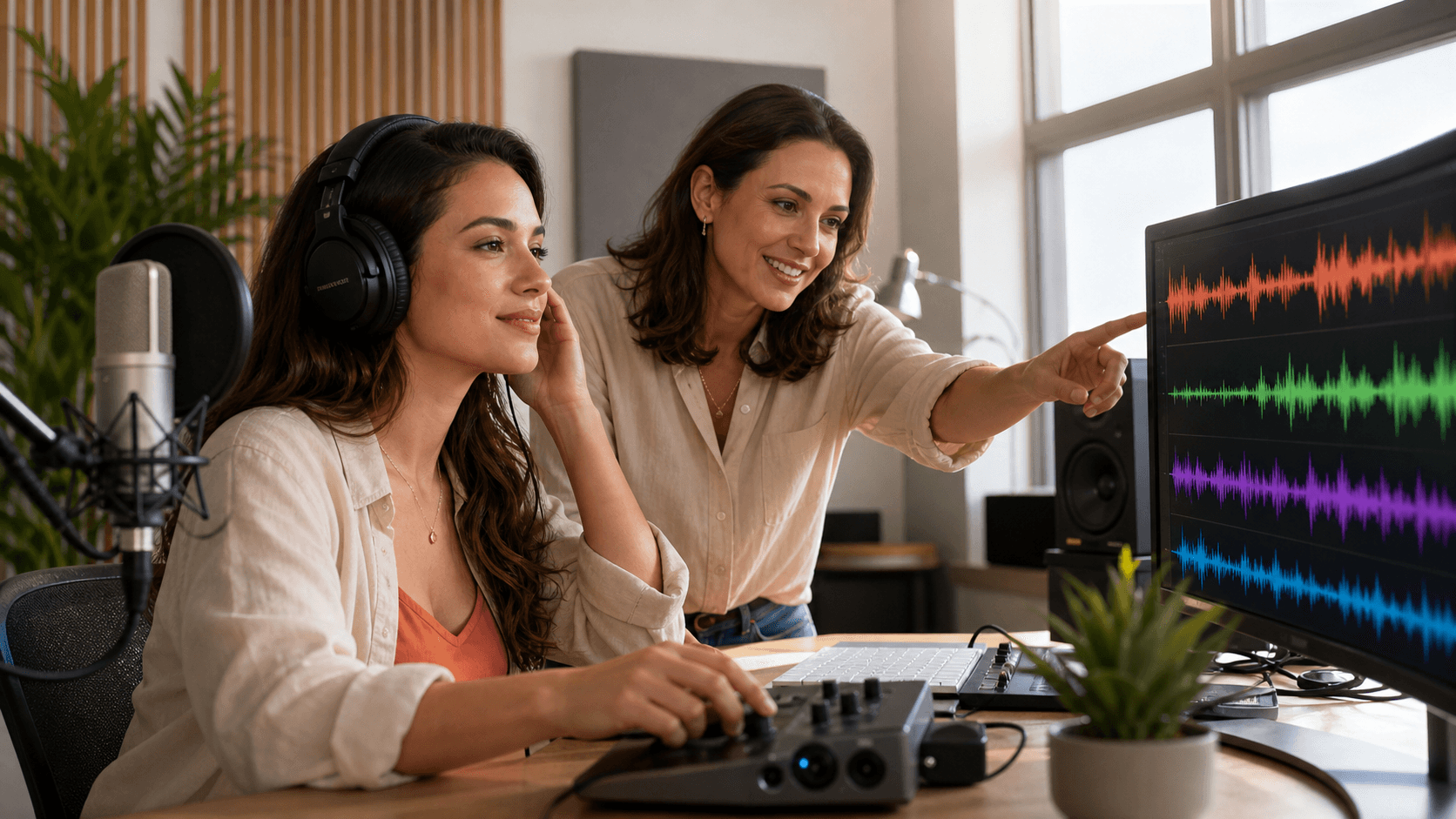
Then we listen to your voice and watch your body as you sing something simple. We look for what is working first, then we notice patterns that might be holding you back. From there, we build exercises just for you, not a one-size-fits-all warm-up sheet.
Tools we might use include:
- Semi-occluded vocal tract work, like straw phonation or lip trills
- Short alignment check-ins, like where your weight is in your feet
- Targeted vowel work to smooth out tricky spots
- Mindset cues to take pressure off, like focusing on curiosity instead of perfection
We are always listening to two things: the sound coming out and the story you are telling yourself about your voice. Maybe you think "I am just a weak singer" or "I always crack on this note." In session, we gently challenge those stories and replace them with more helpful ones.
The space is collaborative. We are not "fixing" you. We are exploring together, building awareness, and celebrating small, steady changes that lead to a voice you can trust on busy days, not just perfect ones.
From Technique to Trust on Stage
Vocal alignment work is only helpful if it shows up when it counts. That is why we connect technique to real performance moments, especially when late summer and early fall are full of gigs, services, and showcases.
When your setup is consistent, it supports you when:
- Nerves pop up right before you sing
- The room acoustics are strange or the monitor mix is not ideal
- You have a long set with little rest
- Someone changes the key or arrangement last minute
Body, breath, and sound alignment give you a kind of "home base" you can return to under stress. Instead of pushing or guessing, you know how to reset your stance, release your jaw, and let breath move so your sound stays steady.
Alignment also supports your own style. A well-aligned voice does not mean one "correct" tone. It means your pop belt, jazz warmth, worship sound, or musical theatre mix can all feel honest and sustainable. You can sing the way you want to sing without copying another singer's setup or risking strain.
Think about:
- Keeping your belt clear and strong through an entire worship set
- Moving through your mixed voice in a musical theatre role without feeling like you have two different voices
- Recording multiple takes in the studio and still having gas in the tank for the last one
That is technique turning into trust. And that trust is what lets you take risks artistically without worrying that your voice will tap out halfway through.
Start Aligning Your Voice with Practical Next Steps
You can start noticing alignment today. Here is a simple at-home check:
- Stand with your feet under your hips and let your knees stay soft
- Gently sway forward and back until you feel your weight in the middle of your feet
- Take a few easy breaths, letting your ribs expand without lifting your shoulders
- Try a soft straw slide or lip trill from low to high, paying attention to ease instead of volume
- Sing one short phrase of a favorite song, aiming for comfort instead of perfection
Over the next week, pay attention to patterns:
- When does your voice feel easiest, morning or evening?
- What rooms or spaces help you sing more freely?
- What thoughts show up right before a tricky note or phrase?
These clues tell you a lot about your current alignment and mindset. A vocal alignment coach can then help you turn those patterns into a clear plan so your voice feels free not just in warm-ups, but in the songs and moments that matter most. At Restore Studios, we believe vocal freedom is a skill you can build with aligned technique, a kind, inner voice, and intentional performance habits, no matter when you start or how long you have been singing.
Unlock Your Most Confident, Aligned Voice Today
If you are ready to sing with consistency, ease, and power, we are here to help you make that next step. At Restore Studios, we focus on sustainable technique so your voice can grow without strain or confusion. Work one-on-one with a dedicated vocal alignment coach who will tailor each session to your goals and current level. Start now so your next performance, audition, or recording session reflects the voice you know you are capable of using.