When Your Voice Is Tired but You Did Everything Right
Vocal strain relief gets confusing when you feel like you are checking every box. You warm up, you drink water, you go to bed early, you try to sing with good technique, and your voice still feels tight or scratchy. That can be scary, especially when you have a full summer of services, gigs, or recording on the calendar.
At Restore Studios, we see this a lot. You are not lazy, you are not broken, and your technique is probably not a total mess. What is often missing is one big part of the picture: your nervous system. Your mind and body are always talking to your voice, and they can either help you feel free or keep you stuck in tension.
Our Vocal Freedom Formula looks at three pillars, Vocal Alignment, Artistic Identity, and Performance Readiness. All three are shaped by your nervous system. When you understand that part of your body a little more, vocal strain relief starts to feel more possible, especially during busy summer seasons when the schedule is packed and the AC is blasting on every stage.
How Your Nervous System Affects Your Sound
Your nervous system is like your built-in safety control center. It is always scanning for danger, then choosing a state for your body. It might say, "We are safe enough," so you feel steady and relaxed. Or it might say, "We are not safe," so it puts you in fight, flight, or freeze.
For singers, those states can show up as:
- Shallow, high chest breathing
- A tight jaw or tongue that will not soften
- Stiff neck and raised shoulders
- Trouble getting into higher notes without pressing
- Wobbly tone or feeling like you have to yell to be heard
This is not your voice "failing." Your body is trying to protect you. Under bright lights, loud sound, and eyes watching you, your nervous system may think, "This is intense, better armor up." That armor often looks like extra squeeze in your throat, ribs, and jaw.
When your nervous system is a bit more settled, your body can let go of some of that armor. Then:
- Your breath can move lower and wider without forcing it
- Muscles in the neck, tongue, and ribs have more give
- Your sound feels easier to shape, not like you are fighting it
- You can access more dynamic range and emotion without blowing out your voice
Nothing is wrong with you when you tense up on a hard note or in a big moment. Your system is doing its job. We just want to teach it that singing, even under pressure, can be a safe thing.
Why Pushing Through Strain Makes Things Worse
Many singers know this spiral. You start a busy stretch of services, rehearsals, or shows. By day three, your voice feels tight. Instead of easing off, you push harder to hit the notes. The sound gets more forced, your throat gets tired, and your confidence drops.
When you "power through" like this, your nervous system often reads it as danger. It thinks, "We are under threat and still going, we must work even harder to protect." So it sends out more tension. You might feel:
- A thick, heavy feeling in the throat
- A burning or scratchy sensation after sets
- Cracks or flips in places that usually feel fine
- The urge to brace your abs, neck, or jaw on every hard note
This makes vocal strain relief harder to reach, not easier. Instead of white-knuckling the sound, we want to build sustainable effort. That means:
- Using enough energy to stay supported, not so much that you squeeze
- Staying aware of your body during songs, not just your pitch
- Pausing to reset when you notice strain, instead of forcing to the final chorus
Easing off is not quitting. It is smart artistry. It lets you keep showing up again and again, for your band, your worship team, your audience, and yourself.
Simple Nervous System Resets for Singers
You do not need a full day at a spa to help your nervous system. A few simple resets before or during singing can shift your body toward more safety and ease.
Try this short pre-singing reset you can do backstage or in your car:
- Ground your feet. Feel the floor under your heels, toes, and the balls of your feet. Let your weight spread out.
- Do a quick body scan. Start at the top of your head and move down. Notice where you are clenching: forehead, jaw, neck, shoulders, belly, legs. You do not have to fix anything, just notice.
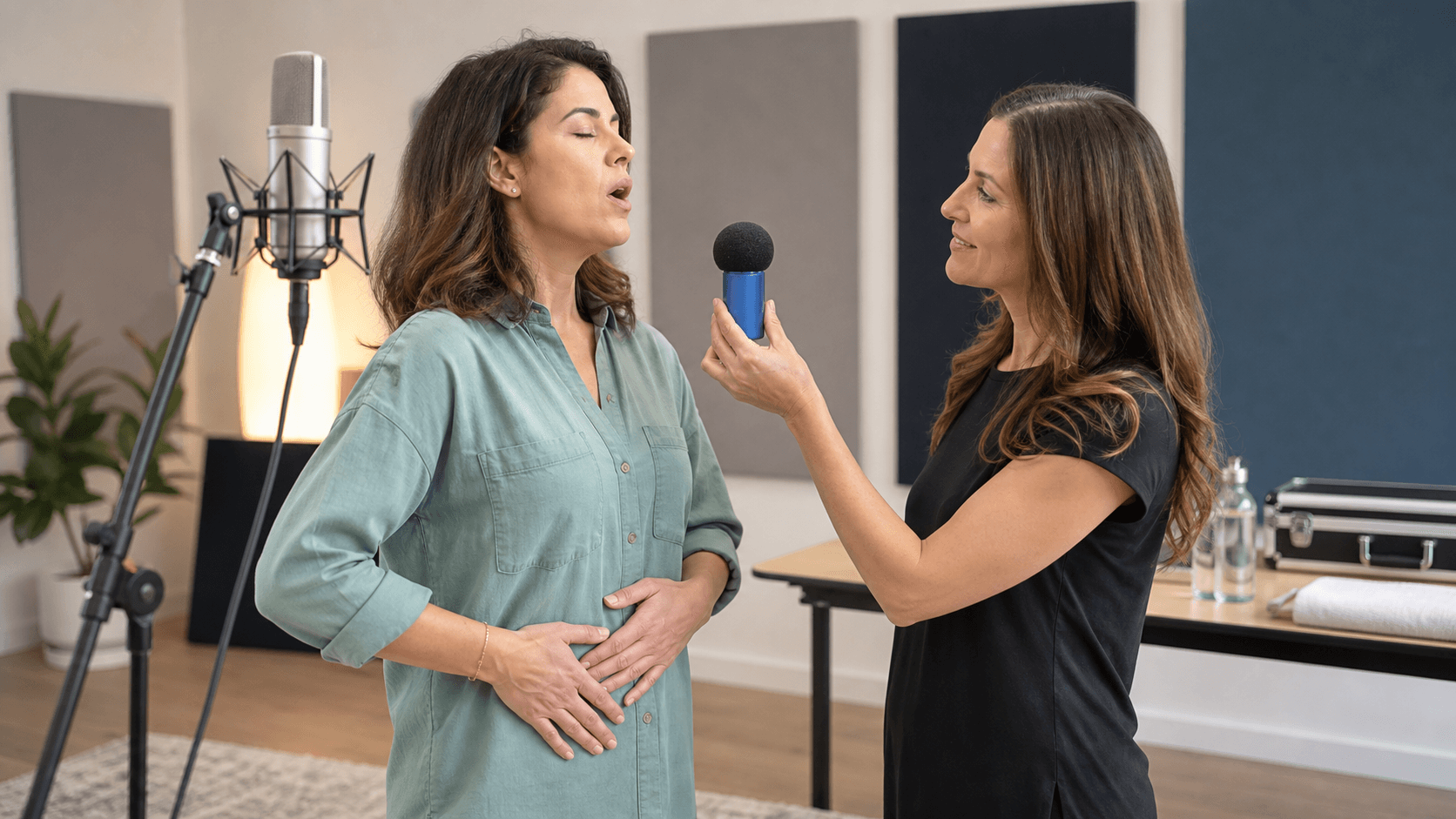
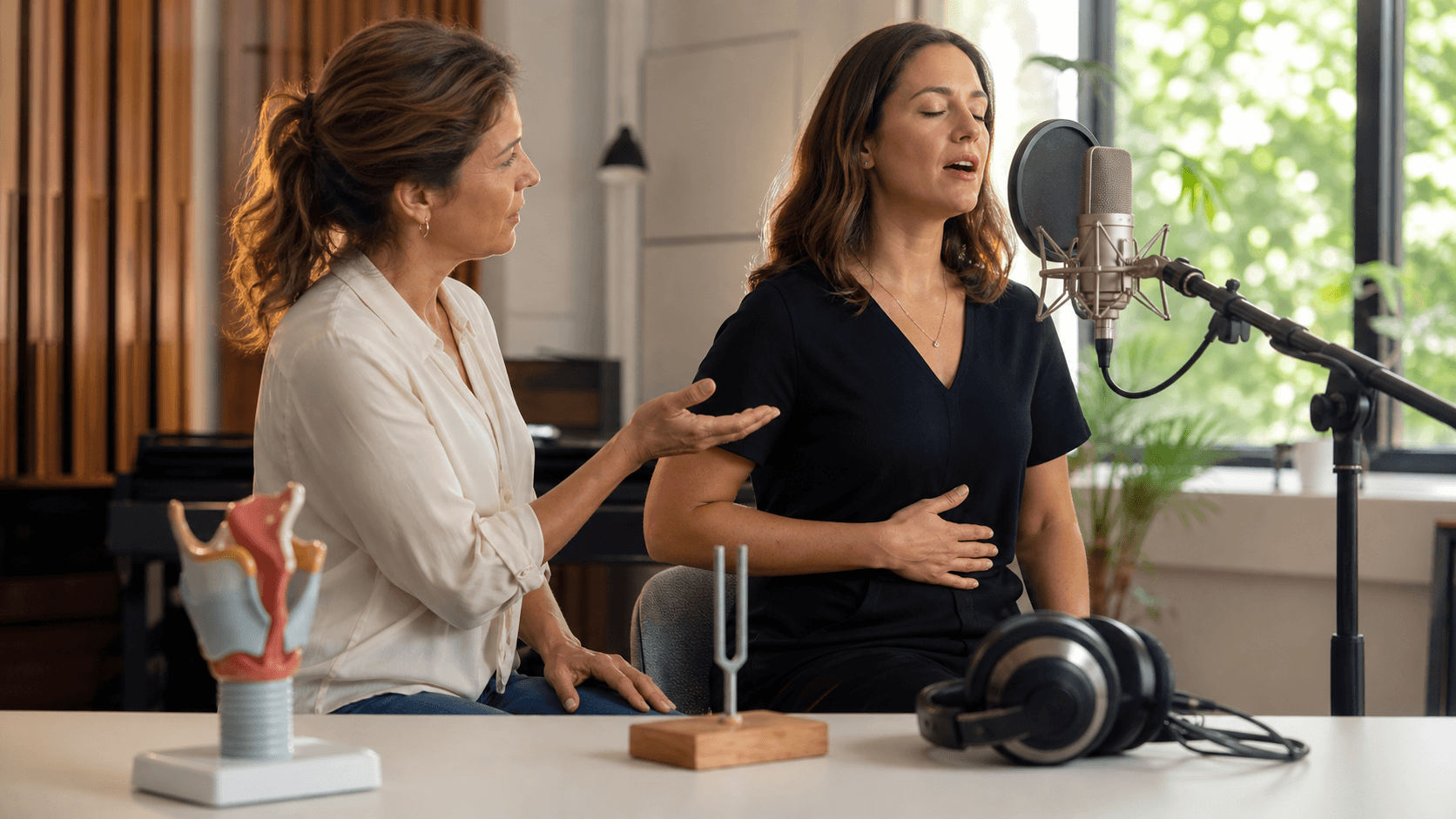
- Add slow, easy breaths. Let the belly and sides of the ribs move a bit without forcing a giant "singer breath." Think gentle, like a quiet sigh.
A simple calming breath pattern can help too, for example:
- Inhale through the nose for 4 counts
- Exhale through the mouth for 6 counts
- Repeat for 6 to 10 rounds
The slightly longer exhale tells your system, "We are allowed to soften." That steadier state tends to support steadier airflow, which lowers the urge to squeeze for high or loud notes.
You can also use light physical release tools, such as:
- Slow shoulder rolls forward and back
- Gentle yes/no head nods without yanking on the neck
- Soft jaw wiggles with the lips closed
- Easy lip trills or humming slides from low to medium range
These send your body a safety signal before you tackle harder material. When your nervous system calms, Vocal Alignment gets much easier. Breath, posture, resonance, and registration can "stack" with less effort, so you feel free instead of forced.
Practicing Performance States Without Burning Out
Performance Readiness is not just about hitting the notes. It also means your nervous system can handle bright lights, sound, and attention without flipping into overload.
You can train this in practice by setting up small "performance" moments:
- Sing a full song all the way through as if an audience is there
- Use a mic, even at home, so your body gets used to the feel and sound
- Turn on brighter lights or stand in a more open area
- Record yourself on your phone so a tiny bit of pressure is present
While you do this, notice your body. Does your heart speed up? Does your breath move higher? Do your shoulders climb, or does your jaw lock? When you notice those signs, pause for a quick reset instead of charging on.
For example, between choruses you might:
- Soften your knees and feel your feet again
- Take two or three longer exhales
- Release your tongue with a gentle tongue stretch or a few lip trills
Over time, these mini-performance reps teach your system that this level of energy and attention is familiar, not a threat. That usually leads to more natural vocal strain relief, less over-singing, and more honest, expressive performances.
Making Vocal Freedom Your New Normal
Vocal freedom is not just luck or talent. It grows when you treat nervous system care like a normal part of your routine, right next to warm-ups, water, and song work, especially during full summer seasons with outdoor stages, travel, and changing weather.
Try this experiment: pick one nervous-system reset, maybe grounding through your feet or the longer-exhale breath. Pair it with one simple vocal exercise every day for a few weeks. Notice how your voice feels before and after. Most singers start to sense more ease, consistency, and control without needing to push as hard.
At Restore Studios, our Vocal Freedom Formula always comes back to the whole singer. We look at how your body lines up, how your Artistic Identity can feel safe and true instead of judged, and how your Performance Readiness supports you under real-world pressure. When your mind, body, and voice are working together, vocal strain relief is not just a quick fix, it becomes part of your new normal as you step into each new season of singing.
Protect Your Voice And Start Healing Today
If you are tired of pushing through discomfort every time you speak or sing, we can help you break that cycle and rebuild healthy habits. At Restore Studios, we use targeted techniques and coaching to identify the root causes of your discomfort and support lasting change. Explore our specialized approach to vocal strain relief and start giving your voice the recovery it needs. Reach out today so we can create a clear, practical plan tailored to your voice and goals.