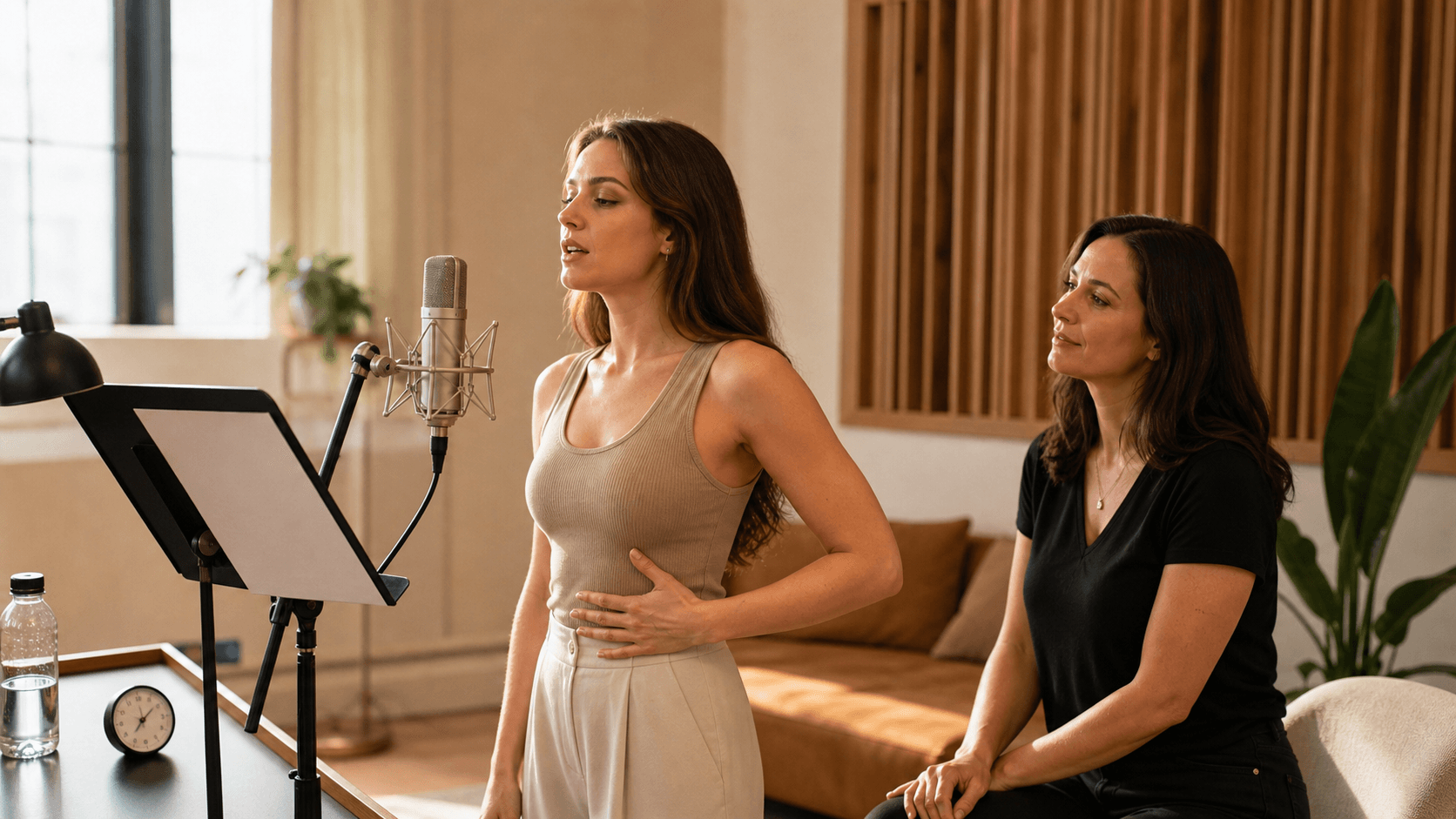
Reclaiming Your Voice After Burnout
Vocal burnout happens to many adult singers. Long seasons of gigs, packed worship services, late nights, or heavy speaking at work can stack up until the voice finally says, "enough." If your voice has tapped out, it does not mean you failed. It means your system hit its limit.
Post-burnout can feel confusing. Maybe your high notes are missing, your voice tires after one song, or your sound feels shaky and strange. You might dread rehearsals or feel like your own voice is a stranger. These are not signs that your voice is gone; they are signs that your body is asking for a different way of working.
At Restore Studios, we care a lot about what happens next. So this article offers a step-by-step return-to-singing plan that puts safety first. Think of it as a gentle roadmap to rebuild stamina, protect your voice, and re-discover real joy in singing, without sliding back into the same burnout loop.
Resetting Expectations Before You Sing Again
Before we talk about exercises, we need to reset expectations. A burned-out voice does not bounce back overnight, even if your fall concerts or holiday services are coming up. Trying to rush back to "normal" by next week often leads to more frustration and more strain.
Take a moment to notice your current season. Ask yourself:
- What has my last few months of singing and speaking looked like?
- Am I coming out of a heavy run of shows, an illness, or a long break?
- When does my voice feel tired the fastest?
- What do I want my singing life to feel like in the next 3 to 6 months?
It can help to jot a few notes in a journal or a phone app. Not a long essay, just simple lines like "voice tired after 2 songs" or "feel anxious before rehearsals." This is not about blaming yourself, it is about seeing patterns.
Try shifting from punishment to curiosity. Instead of "I lost my edge," ask, "What supports my voice best right now?" Professional vocal training is not only for high-pressure touring artists. It can be a kind, structured space for any adult singer to rebuild technique, confidence, and consistency in a realistic way.
Phase One: Gentle Reconnection with Breath and Sound
When we rebuild, we start below the vocal folds. The goal in this first phase is not big notes or long practice sessions. It is quiet awareness, 5 to 10 minutes a day.
Some simple ideas:
- Lie on your back with your knees bent and one hand on your belly. Notice your belly gently rise as you breathe in through your nose and fall as you breathe out.
- Take slow, silent nose breaths, then let out soft, unforced sighs on "ah" or "oo."
- Try light lip trills, closed-mouth humming, or softly blowing bubbles into a glass of water through a straw, keeping the airflow steady and easy.
We keep everything very light. Here are some safety guidelines for this phase:
- Stay under 3 to 5 minutes of actual sound at a time.
- Stop before you feel tired, tight, or frustrated.
- Keep your volume at soft to medium, no pushing.
After each mini-session, take 30 seconds to check in. You might write, "throat felt easier today" or "got tired quickly on hums." This early stage is about waking up coordination again, not chasing high notes or power. If you feel unsure, this is a good time to get support from professional vocal training so you are not guessing alone.
Phase Two: Building Stamina with Smart Structure
Once gentle vocalizing feels easy on most days, you are ready for more structure. Phase Two is about short, planned sessions instead of random bursts of singing. A good starting point is 15 to 20 minutes, 3 or 4 times per week.
Think of your session in this simple order:
- Body release
- Breath
- Gentle warm-ups
- Easy songs
Body release can be tiny things like:
- Slow neck rolls within a comfortable range
- Shoulder shrugs and circles
- Soft jaw and tongue stretches, like a lazy yawn
Then move into warm-ups. Stay in a middle, comfy range and start with sounds that feel cushioned, such as:
- "mm" on stepwise scales
- "ng" glides
- Lip trills on 3 or 5-note patterns
When that feels easy, add clear vowels like "ee," "oh," and "ah" on short, simple patterns. Avoid your highest and lowest notes at first. Think of this as teaching your voice, "We are safe, we are supported."
To keep things safe, create a "volume and duration budget" for each practice:
- No more than 5 minutes total at anything above a medium volume
- Around 10 to 12 total minutes of actual singing within your 15 to 20 minute session
- Plenty of mini breaks to breathe, stretch, and notice how your body feels
This is where professional vocal training can really support you. A coach can help you design routines that fit your real life, your current stamina, and your performance plans, so you are training in a way that your schedule and body can actually hold.
Phase Three: Returning to Repertoire and Performance
When your short practices feel steady and your voice bounces back well, it is time to return to songs. We start in the middle of your range with music that feels kind to your body and emotions. Save your big belters and "must nail it" songs for later.
A simple traffic-light system can help:
- Green songs: Easy range, low emotional and physical stress, you could sing them on a tired day.
- Yellow songs: More demanding in range, volume, or emotion, but still doable with focus.
- Red songs: High demand, lots of belting, long phrases, or big emotional weight.
Build your sets mostly from green songs, with a light sprinkle of yellow. Keep red songs for special moments and bring them back only when your stamina feels stable and your warm-ups feel solid over time.
Try some "mock performances" at home. Turn on bright lights, stand as if you are on stage or at the front of a room, and sing through a short set. Notice:
- When does your body start to tense?
- Do your shoulders rise, jaw tighten, or breath shorten?
- Does anxiety spike on certain songs?
Practicing performance conditions with a coach can help you learn how to pace your set, release tension, and manage nerves so busy seasons do not push you straight back into burnout.
Daily Habits That Protect Your Voice Long Term
Your singing voice does not live in a bubble. It is affected by sleep, stress, hydration, and how you use your speaking voice all week long. Small daily choices make a real difference, especially in places with shifting seasons and allergens like we see in our own area.
Some simple, nonmedical habits to support your voice:
- Regular water intake through the day
- Consistent sleep routines as often as your life allows
- Gentle movement like walking or stretching
- Mindful voice use in meetings, classes, or social settings
Think about "voice-friendly boundaries." That might look like:
- Planning at least one true vocal rest day each week
- Limiting late-night yelling over loud music or crowds
- Scheduling quiet time before and after big services or shows
- Avoiding stacking several intense vocal days in a row when you can help it
Remember, your voice is part of your whole system, including your mind, body, and emotions. Short stretching breaks, calm breathing before rehearsal, or a quick check-in about how you are feeling can lower tension and help you show up with more ease.
When you pair these habits with ongoing professional vocal training and caring support, you are not just recovering from burnout. You are building a singing life that is steadier, kinder, and more sustainable, so you can keep using your voice with confidence for the long haul.
Unlock Your Best Voice With Expert Coaching Today
If you are ready to hear real improvement in your tone, range, and confidence, our coaches at Restore Studios are here to guide you step by step. With personalized sessions and clear, practical feedback, we focus on the skills that matter most for your goals. Explore our professional vocal training options and take the next concrete step toward the voice you want. Let us help you build a vocal foundation that supports you in the studio, on stage, and beyond.