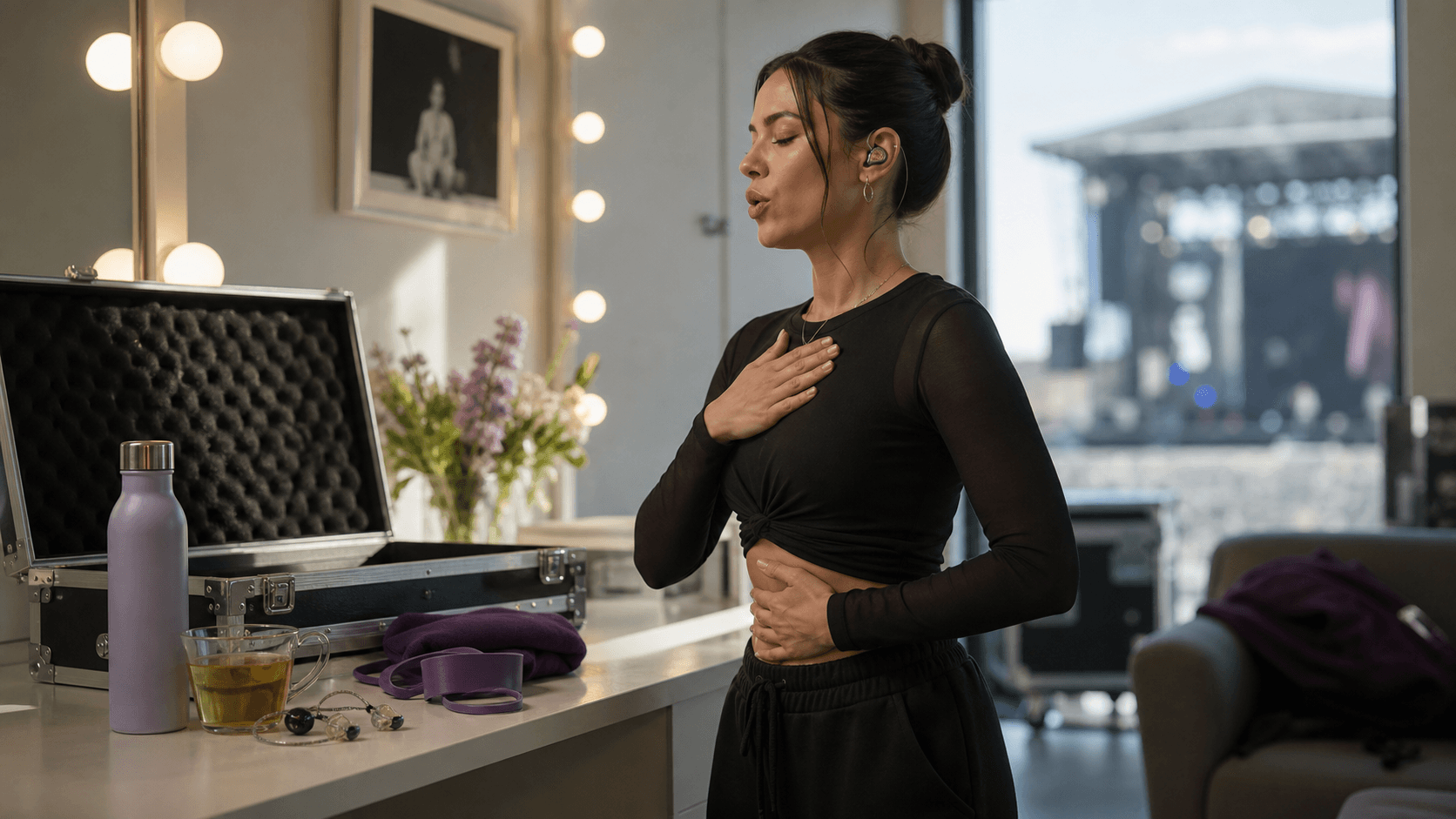
Build the Voice You Can Count on All Tour Long
Touring in the fall can feel like a perfect storm. More shows, colder air, packed indoor rooms, and long travel days all land on the same set of vocal folds. If you want to keep singing with freedom all season, vocal endurance training has to become part of your daily life, not something you squeeze in when your voice starts to feel rough.
At Restore Studios, we view endurance as daily maintenance. Small, kind habits keep your voice flexible, reliable, and expressive, even when the schedule is intense. Our Vocal Freedom Formula gives us a simple way to plan that daily care:
- Vocal Alignment (easy, efficient mechanics)
- Artistic Identity (protecting how you naturally sing)
- Performance Readiness (managing your energy, not just "pushing through")
The plan here is realistic for worship leaders, touring artists, and gigging singers. It is built to fit around bus calls, sound checks, services, and club sets, so it supports your life instead of taking it over.
Sleep and Recovery Rituals That Protect Your Range
Sleep is the base of vocal endurance training. When you are rested, your nervous system calms, muscles recover, and your brain can focus on healthy technique instead of scrambling to survive the night. Good sleep makes it easier to find breath support, clear resonance, and honest emotion on stage.
On tour, perfect sleep is rare, so we think in terms of a "sleep budget" across the day. Aim for:
- A core block of sleep whenever your schedule allows
- Short naps to top up your total hours
- A simple, repeatable wind-down, even if it is late
Your wind-down can be very basic: dim the lights, do a few gentle stretches, sip caffeine-free tea, maybe a few minutes of quiet steaming. Use an eye-mask to block light and earplugs or white noise to soften hotel or bus sounds. The key is a clear "off switch" cue that tells your body the show is done.
After late-night sets, it is tempting to scroll, eat a big meal, or rewatch show clips for hours. Try a different pattern: a soft cool-down vocal routine, light snack if you need it, screens away, and then into your wind-down. This helps your body shift out of performance mode so tomorrow's alignment and focus stay dependable.
Hydration and Daily Vocal Warm Care
Hydration is quiet, steady vocal endurance training. Well-hydrated tissues bounce back from long sets, big choruses, and high-intensity worship moments with more comfort and fewer scary surprises.
Instead of chugging water right before you sing, build an all-day flow:
- Drink a glass of water soon after waking
- Sip regularly through the day, not just backstage
- Use room-temperature or warm drinks, which feel kinder in cool fall air
- Balance dehydrating choices like alcohol, heavy caffeine, and salty snacks with extra water
Along with hydration, we like a daily "warm care" mini-routine, even on non-show days. Think of it as checking the instrument, not testing its limits. Try:
- Light semi-occluded exercises such as lip trills or straw phonation
- Easy sirens and slides in the middle of your range
- Gentle humming to see where the voice wants to sit that day
This is not the time for full-volume belting at breakfast. Use these sounds as a body scan for your voice. Ask, "Do I feel tight, tired, or free today?" Notice without judgment. That awareness gives you information you can use when planning your warm-up and set.
A refillable bottle, a couple of favorite herbal teas, and a small portable steamer (if you like steaming) all travel well and make this care easier to repeat night after night.
Managing Vocal Load and Show-Day Pacing
Vocal load is simply how much, how long, and how intensely you use your voice. Talking, warming up, rehearsing, praying aloud with people, and singing all add up. On show days, unmanaged load can sneak up on you fast.
A simple pacing template helps:
Morning
- Keep speaking low-key and gentle
- Do a short check-in warm-up, not a stress test
- Avoid loud restaurants or long calls when you can
Afternoon
- Do a focused 10 to 15-minute technique touch-up
- Work on efficient breath and resonance, not highest notes or strongest belt
- Rest the voice between tasks, especially if you have meetings or rehearsals
Pre-show
- Start with easy airflow and resonance exercises
- Then move into the exact sounds your set needs, like riffs, mix, or sustained notes
- End the warm-up close to how your first song feels
Setlist pacing is part of vocal endurance training too. Try to:
- Place your heaviest songs in smart spots, not all at the top
- Add mid-set "recovery" moments, like acoustic songs or lower-tessitura tunes
- Use the mic, monitors, and room to do the heavy lifting so you do not feel you must shout
When you manage load with care, you support Performance Readiness. You are not saving everything for opening night, then crashing. You are planning for consistent, honest performances across the whole run.
Smart Use of in-Ears and Travel Recovery
In-ear monitoring can be a big help for endurance when you use it with intention. If you hear yourself clearly, you do not need to push to "cut through" the band.
A few simple in-ear tips:
- Keep your own voice clear but not blasting
- Balance the band mix so you feel the groove without having to shout over it
- Work with your engineer during soundcheck to clean up harsh or boomy sounds that make you tense your jaw or throat
Touring also means constant travel stress, which can show up in your sound. After flights or long drives, give your body time to arrive.
Try this simple reset:
- Gentle movement to wake up hips, spine, neck, and shoulders
- A few slow, easy sighs, hums, or NG slides
- Warm showers or breathing in steam to soothe dryness from planes or heated hotel air
- Shorter warm-ups when you feel travel fatigue, letting the voice warm gradually
At Restore Studios, we treat mind, body, and voice as one instrument. When travel pulls you out of balance, your sound often reflects that. Tending to your whole system is not extra, it is part of keeping your voice reliable on the road.
Bringing It All Together on the Road
Here is a simple way to remember the daily maintenance plan:
- Sleep and nervous system recovery
- Steady hydration and gentle daily warm care
- Thoughtful vocal load and show pacing
- Smart in-ear choices and travel recovery habits
From our studio base, we see singers thrive when they adapt these ideas to their own lives. Notice how your voice responds, track small changes in a notebook or phone, and adjust. Your version of this routine might look different from another singer's, and that is a good thing.
Within our Vocal Freedom Formula, Vocal Alignment keeps your mechanics efficient, Artistic Identity protects your natural sound, and Performance Readiness helps you show up fully, night after night. When those three work together, vocal endurance training stops feeling like fear and starts feeling like freedom.
Build Reliable Vocal Stamina That Lasts On Stage
If you are ready to sing longer, louder, and with less fatigue, our team at Restore Studios is here to guide you. Work with a coach who understands how to balance power and vocal health through customized vocal endurance training. We will help you create a sustainable routine so your voice can handle rehearsals, sessions, and shows with confidence. Take the next step today and start building the stamina your performances demand.