Sing Strong All Service Long with Sustainable Vocal Technique
Busy worship seasons can be beautiful and brutal at the same time. Fall conferences, extra rehearsals, Christmas prep, and back-to-back Sundays can leave your voice feeling worn out before you even hit December. If you end a weekend with a sore throat, a tired top range, or the feeling that you have to push to be heard, you are not alone.
Sustainable vocal technique in a worship setting means this: you can sing multiple songs, across multiple services, for multiple weeks, without feeling blown out or dreading that high bridge. Your voice should feel used, not abused. At Restore Studios, we use our Vocal Freedom Formula, built on Vocal Alignment, Artistic Identity, and Performance Readiness, to help worship singers protect their voices while still leading with passion and honesty.
In this post, we are going to keep things simple and practical. We will walk through mic technique, key selection, and set-flow strategies that work with your body instead of against it, plus a few mind-body habits to keep your voice steady all season long.
Mic Technique That Works With Your Voice, Not Against It
Good mic technique lets you sing with less effort and more freedom. When you stay closer to the mic, you do not have to push to reach the back row. The sound system does the heavy lifting so your body does not have to.
Think of three basic mic positions for a worship set:
- Close: 1 to 2 inches from your lips for soft, intimate lines or light mix.
- Mid: about a fist away for normal singing, clear tone, and stable volume.
- Big: slightly off to the side or pulled back a bit for strong belts or shouts.
Common habits that wear you out:
- Holding the mic way out, then pushing your voice to be heard.
- Dropping the mic toward the floor between phrases, so your first word of the next line gets lost.
- Cupping the mic head, which changes the sound and can make it harder to hear pitch clearly.
Try this at your next rehearsal: keep the mic pointed at the corner of your mouth almost the whole time. Move it just a little closer for quiet phrases, and slightly off-axis for your biggest notes. Notice how much less you feel the urge to push.
Monitors also change how hard you sing. In-ears, wedges, and room sound all affect your effort level. Some quick tips:
- Ask for your vocal a bit louder and clearer than you think you need, so you are not fighting to hear yourself.
- Make sure you can hear a strong pitch reference, like keys, acoustic, or tracks.
- If the room feels boomy or echoey, lean on your in-ears or wedge mix rather than pushing your volume.
When your ears feel safe, your body relaxes, and your voice does not have to work as hard.
Choosing Keys That Support Sustainable Vocal Technique
Key choice is not about being weak, it is about being wise. Sustainable vocal technique means choosing keys where your money notes, the notes you hit over and over, sit in a strong, comfortable part of your range. This matters most on choruses and bridges that repeat.
To assess a key, look at:
- The highest note, and how many times you hit it.
- The lowest note, and whether it feels heavy or swallowed.
- How your voice feels after singing the full song two or three times, not just once.
On a team with multiple singers, you also have to think about blend and handoffs. A key that is perfect for one voice might be a stretch for another. Sometimes lowering a key even half a step can turn a risky bridge into something you can sing cleanly all weekend long.
Try a simple testing process in rehearsal:
- Start in the original key and sing the whole song. Notice your breath, jaw tension, and how your upper range feels by the last chorus.
- Try the song one step up. Are your big notes now in a shouty place, or do they feel clear and ringing?
- Try the song one step down. Do your choruses still feel exciting, or do they start to sag?
Your body will tell you the truth. The key that lets you stay present, connected, and steady, not just hyped, is usually your best long-term choice.
Smart Set-Flow Strategies That Save Your Voice
Set flow is not only about spiritual arc, it is also about vocal load. The way you stack songs can either give your voice tiny moments to reset or push it to the edge before the sermon even starts.
Think about building in micro recovery:
- Avoid three high, belty anthems in a row.
- Follow a big, rangey song with something more mid-range or reflective.
- Use call and response moments to let the congregation carry the sound while you lighten your mix.
If you lead multiple services, plan your weekend, not just one set. Decide which song or two you will go all out on, and where you will choose to sing a little lighter. You can still lead with passion while using:
- More mix and less chest in higher sections.
- Softer consonants instead of punching every word.
- The mic for impact instead of pushing more volume from your body.
Talking with your worship leader or music director helps a lot. You might say something like, "These two songs sit really high for me. What if we spread them out in the set so I can stay strong all service?" Framing it as care for the whole team's consistency keeps the focus on serving well together.
Mind-Body Habits That Keep Your Voice Holiday Ready
Your voice lives in your body, so whole body habits matter, especially in busy seasons with cooler, drier air and more indoor heating. Sleep, hydration, and stress levels all show up in your tone, stamina, and range.
Simple pre-service and between-service rituals can help:
- Gentle neck, shoulder, and rib stretches to release tension.
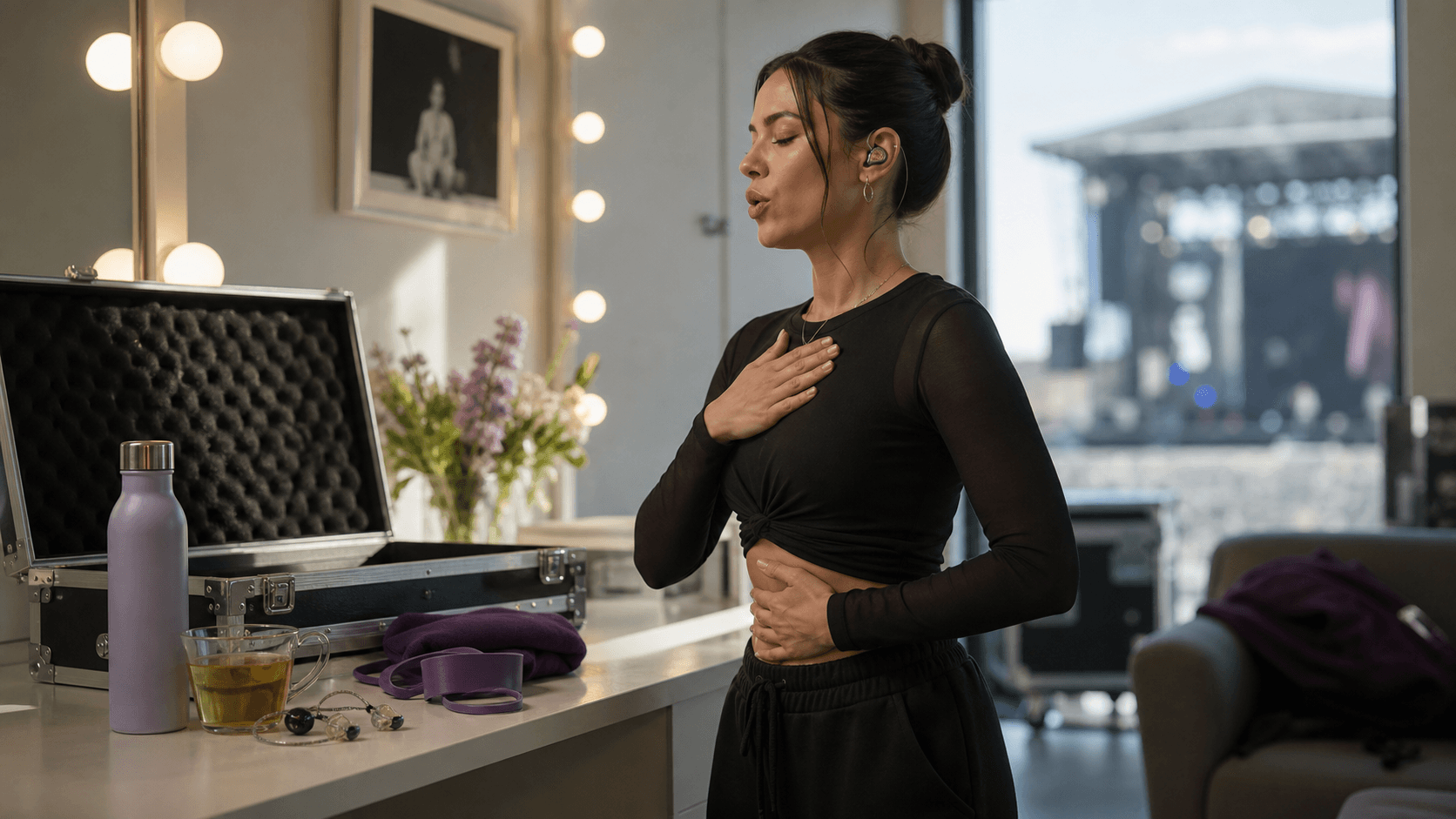
- A few slow belly breaths to quiet your nervous system.
- Low, easy hums and lip trills instead of jumping straight to big belting.
- Light sirens on "ng" or "oo" to connect breath and resonance.
- A short cool-down after the last service, like quiet slides or soft humming.
Performance pressure in worship is real, even when our heart is in the right place. When anxiety rises, many singers push, over-sing, or try to prove something with their sound. Grounding yourself with slow breathing, remembering your artistic identity, and focusing on honest connection can help you stay within your healthy limits.
Give yourself permission to adjust in real time. If your voice feels tired, you can:
- Use more mix instead of full chest voice.
- Stay a bit closer to the mic and back off your volume.
- Soften one or two high ad-libs instead of going for every single run.
This is not letting your team down. It is caring for the instrument you have been trusted with.
Turn Today's Set Into a Sustainable Vocal Win
Sustainable vocal technique is really about partnership. Your voice, your gear, and your planning all work together so you can lead with passion again and again, not just power through busy months and hope you still have a top note left by January.
For your next service, choose one simple change in each area: adjust your mic technique, recheck one song key, and make one small set-flow or pacing shift in rehearsal. Notice how your voice feels afterward. When you line up your mind, body, and voice with your calling as a worship leader, you build the kind of vocal freedom that lasts for the long haul.
Protect Your Voice With Techniques That Last a Lifetime
If you are ready to sing with power, ease, and consistency, we are here to guide you. Our coaches specialize in sustainable vocal technique that supports both your artistry and your vocal health. At Restore Studios, we will meet you where you are and help you build reliable habits you can trust on stage and in the studio. Schedule your first session today and start investing in a voice that can grow with your career.