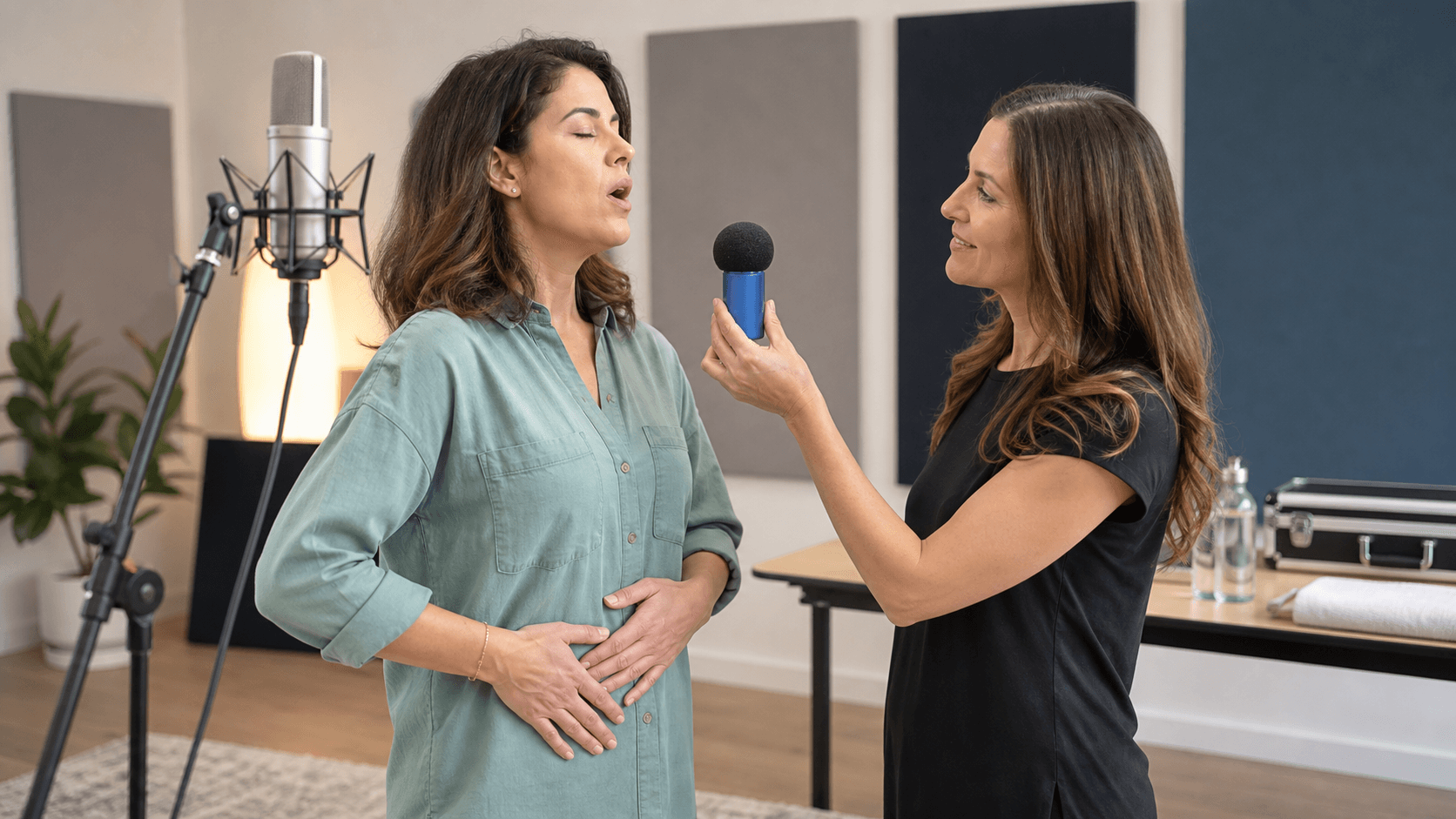
Build Stamina Without Burning Out Your Voice
Vocal endurance training is simply learning how to sing longer without your voice falling apart. If you sing long sets, back-to-back services, tours, recording days, or those stacked holiday shows, stamina matters. You want your voice to feel steady from the first song to the last, not like it is hanging on by a thread.
Many adult singers struggle with this. You might feel tired halfway through a set, crack on higher notes near the end, or feel worn out after rehearsal. Some days everything feels easy, then the next day your voice will not cooperate. That can be frustrating, especially when you care about your craft.
At Restore Studios, we see that most endurance problems are not about talent or willpower. They are usually about small hidden habits in your technique, mindset, and practice plan. So let us walk through some common mistakes and how our Vocal Freedom Formula, with Vocal Alignment, Artistic Identity, and Performance Readiness, can point you toward steadier, happier singing.
Mistake 1: Treating Endurance Like a Gym Workout
A big myth is that if you just push harder, sing longer, and belt more, your voice will "get stronger" like a muscle at the gym. So you might stack extra songs, repeat high notes again and again, or sing full-out at home after a long rehearsal, hoping it will build power.
The problem is your voice is not a bicep. It is delicate tissue, tiny muscles, and a fine-tuned system that includes your breath and nervous system. When you overload it, you are more likely to get swelling, tension patterns, and uneven tone than real stamina.
Try shifting from grind mode to smart training:
- Use shorter, focused practice blocks instead of one long marathon
- Mix intensity: one strong song, one medium, one super light, then rest
- Add gentle warm-ups at the start and cool-downs at the end
- Learn your early warning signs like thicker tone, fuzzy onset, or a heavy feeling in the throat and stop before you hit a wall
Think of endurance training more like interval walking than max deadlifts. You are teaching coordination and resilience, not just force.
Mistake 2: Skipping Alignment in Vocal Endurance Training
Vocal Alignment means your breath, body, and voice are working together instead of fighting each other. When alignment is off, you spend extra effort just to make basic sound. That might feel fine for one song, but over a whole set it drains your energy fast.
Common alignment leaks we see with adult singers are:
- Locked knees or hips creating stiffness through the whole body
- Collapsed ribs that shut down easy breath flow
- Tight jaw or tongue that grips on high notes or loud phrases
- Shallow chest breathing instead of low, expanding breaths
- Chin lifting toward the ceiling to reach high notes
- Squeezing the abs to "push" for power instead of letting breath support
Before a set, try a quick posture reset: feet grounded, soft knees, ribs gently open, head stacked over the spine. Take a couple of slow, low breaths and feel the belly and ribs expand.
Between songs or during rehearsal breaks, simple tools help you reset without adding strain:
- A few grounding breaths while you release your shoulders
- Gentle neck rolls and jaw wiggles
- Semi-occluded exercises, like lip trills, tongue trills, or straw phonation, to bring the voice back to balance at a softer volume
When your body is aligned, you use less effort for the same sound, which is a huge win for endurance.
Mistake 3: Practicing Only at Full Performance Mode
Many singers treat every practice like opening night. Full volume, full range, full emotion, every time. This is especially common before busy seasons like summer festivals or late-summer worship conferences, when you feel pressure to nail every detail.
The trouble is your system never learns a cruise control mode. Your muscles burn out faster, and under stress you may lose the lighter shades of your voice. You get used to only one gear: "all in."
Try thinking of your voice like a dimmer switch instead of an on-and-off button. You want lots of levels.
Here are some ways to layer your work:
- Run songs at 60 to 70 percent volume first, then only go full-out on a couple of key passes
- Practice tricky sections on a neutral syllable like "goo" or "mee" before adding lyrics
- Add emotion in stages, instead of going straight to your most intense expression
- Plan at least one low-intensity rehearsal day per week that focuses on technique and gentle recovery
This kind of practice builds flexibility and staying power. Your voice learns it does not have to sprint every time it opens.
Mistake 4: Ignoring Mindset and Performance Nerves
Endurance is not just about your throat; it is also about your thoughts. Performance anxiety, perfectionism, and harsh self-talk can sneak tension into your neck, jaw, and belly before you even sing a note. Then you push harder to prove you are "good enough," especially at the top of a set.
Common patterns we hear from singers include:
- Over-singing the first song, then fading out by the last
- Comparing your stamina to other singers on stage
- Panicking when you feel your voice getting tired, then forcing more sound
- Treating every small crack as proof you are not ready
Instead, think of Performance Readiness as building a calm, steady base. Some simple grounding tools:
- A pre-show routine that includes slow breathing and easy stretching
- Gentle, kind self-talk, like "I can pace myself, I do not have to prove anything"
- Planning rest moments in your set, such as backing off on certain lines, using more mix or head voice, or choosing lighter phrasing in some choruses
- Running longer sets in low-pressure practice so your brain learns, "We are safe, we know how to do this"
When your nervous system is calmer, your voice does not have to fight as hard. That alone can free up a surprising amount of stamina.
Mistake 5: Inconsistent Habits Between Seasons
Singers often live in seasons. One month is quiet, then suddenly you have summer festivals, late-summer retreats, then a busy fall choir or gig season. That jump in vocal load can expose every weak spot in your endurance.
Here is the trap: during calm times, practice gets loose. Then, when a big event shows up, you cram. You sing a lot in a short window, maybe push too hard, then after the event you take a long break again. Your voice never gets a steady, kind training rhythm.
Instead, think small and steady:
- Keep year-round micro-habits like 10 to 20 minute technique sessions a few times a week
- Add one longer "endurance run" practice each week to rehearse full sets at planned intensity
- Slowly ramp up your vocal load 4 to 6 weeks before a busy season, instead of all in right away
- Support your whole system with simple wellness habits like regular water, decent sleep, gentle movement, and breaks from loud talking
Where we are based, weather shifts can mean dry air or sudden temperature changes, which can affect how your voice feels. Consistent, gentle habits help your instrument handle those changes.
Turn Your Practice Into Sustainable Vocal Freedom
Vocal endurance training is not about being tougher or trying to prove that you can power through. It is about aligning your technique, mindset, and schedule so your voice can do its job with ease, song after song, season after season.
At Restore Studios, our Vocal Freedom Formula is built around that idea. Start with a quick self-audit: which of these five mistakes sounds most like you right now? This week, pick one small shift, like shorter focused practice blocks, an alignment check before you sing, a calmer warm-up, or a simple weekly plan that supports your next busy stretch. Small, steady changes can add up to the kind of stamina that feels free, not forced.
Strengthen Your Voice With Proven Endurance Coaching
If you are ready to sing longer with more consistency and less strain, our coaches at Restore Studios are here to help. Explore our specialized vocal endurance training to build stamina, control, and confidence in every performance. We tailor each session to your goals so you can maintain a healthy, reliable voice in the studio, on stage, or on tour. Reach out today to schedule your first session and start investing in a voice that lasts.