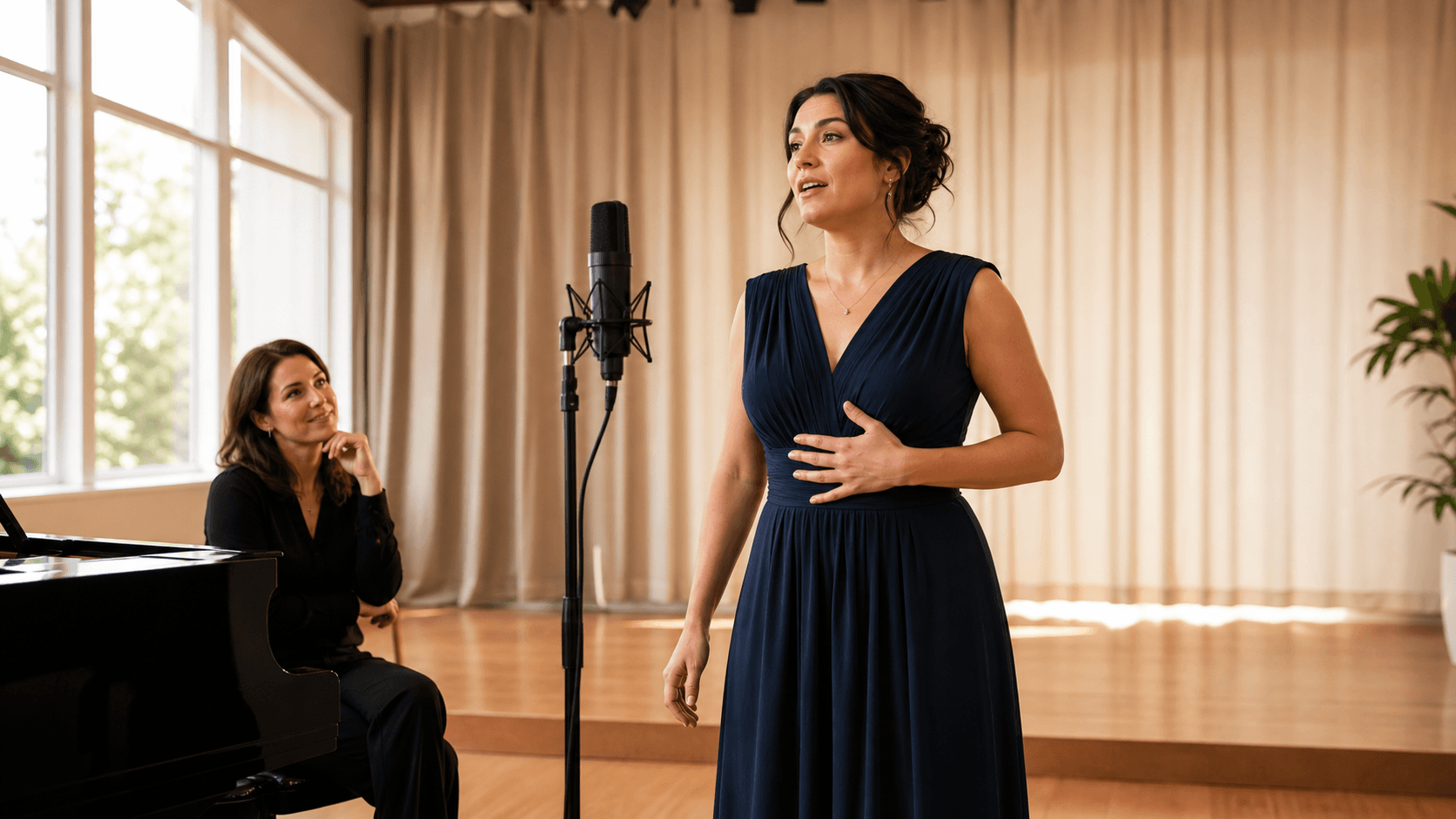
Find Supportive Coaching When Your Voice Feels Fried
When your voice feels worn out, it can be scary. You might feel fine at the start of the day, then by evening your range is smaller, your high notes feel tight, or your speaking voice sounds rough. Maybe you need more and more time to recover after a rehearsal or service. Your throat feels tight or sore, and you feel strangely emotional about singing, almost like you want to avoid it.
Many adult singers go through this. Performers, worship leaders, teachers, and hobby singers often juggle long days, loud rooms, stress, and uneven practice habits. Over time, that strain can show up in the voice. Nothing about that makes you weak or broken. It just means your voice is asking for a different kind of support.
Holistic voice coaching is not about pushing harder or proving you are strong enough to "power through." It is about slowing down, listening to your body, and building habits that help you sing and speak with more ease. When burnout shows up, the right coach can help you reconnect with your voice in a kind, sustainable way.
What Holistic Voice Coaching Really Means
Holistic voice coaching looks at the whole person, not just the sound. Instead of only focusing on scales and songs, we pay attention to how your body, mind, and schedule all affect your voice. That can include things like posture, breath, nervous system patterns, and how you recover between busy days.
A holistic coach might be curious about:
- How you stand, sit, and hold your neck and jaw
- Your breathing habits in daily life, not just when you sing
- How stress, anxiety, or perfectionism show up in your body
- Your sleep, rehearsal load, and how often you raise your voice
It is important to be clear about what holistic voice coaching is not. It is not medical treatment, and it is not mental health therapy. A coach cannot diagnose vocal injury or treat health conditions. It is also not a magic shortcut to instant high notes. Instead, good holistic coaching supports healthy technique, body awareness, and simple tools you can use between sessions.
When you feel burned out, this bigger lens can be powerful. We can gently explore how life factors, like constant speaking at work or tight shoulders from stress, might be feeding your vocal fatigue. Then we pair that with grounded technique, so your singing and speaking feel more supported and less like a fight.
Credentials That Actually Matter for Burned-Out Singers
When your voice already feels fragile, the coach you choose matters. You deserve someone who understands both technique and the reality of adult life.
Helpful background can include:
- Vocal pedagogy or formal voice study, classical or contemporary
- Ongoing learning in vocal science or somatic (body-based) approaches
- Experience performing or working in settings where voices get heavy use
Look for a coach who often works with:
- Adults returning to singing after a break
- Teachers, worship leaders, and gigging singers with tired voices
- Singers dealing with fatigue, inconsistency, or loss of confidence
Another green flag is a collaborative mindset. A responsible coach respects their role and knows when to suggest that you see an ENT or a speech-language pathologist. They are not threatened by other professionals. They are willing to be part of a team so you get the right kind of care at the right time.
Red Flags When You Are Already Feeling Burned Out
When you are worn out, certain coaching styles can actually make things worse. Trust your gut if something feels off.
Big red flags include:
- Fear-based language, like constant warnings about "ruining" your voice
- Blaming or shaming you for how your voice sounds
- Promises to "fix" you fast or make you perfect if you just work harder
Be careful with coaches who push you to sing past pain or clear discomfort. If someone insists you "sing through it," forces high or loud singing when your voice feels fragile, or brushes off your reports of soreness, that is not safe or respectful. Hustle culture shows up in music too, and it can lead to more burnout.
Watch out for overpromising as well. Claims of overnight transformation, secret methods, or results with no real explanation can be a sign that the coach is not grounded in real vocal work. If they avoid questions about their training or approach, or talk in circles instead of being clear, it may not be a good fit.
What a Supportive First Session Should Include
Your first session with a holistic voice coach should feel gentle and curious, not like an audition. Before you sing much, there should be time for a real conversation. A thoughtful coach will ask about your singing history, how your voice feels during the day, your current schedule, and where you notice strain in your body. They will also ask about your goals, like wanting more stamina for weekend services or steadier vocals for studio work.
The actual singing part should be low-pressure. A kind first session often includes:
- Easy-range sighs, hums, and slides
- Simple warming up, not full-out belting
- Observing posture, breath, and speech in a relaxed way
- Reminders that there is no "pass or fail" in this space
By the end of that first meeting, you should have one to three small, clear practices to try. These might be short breathing check-ins, a tiny warm-up routine, or a simple way to monitor how your voice feels after certain tasks. You should also have a sense of the pace ahead, with no quick-fix promises, just an honest plan to see how your voice responds over time.
Questions to Ask Before You Commit to a Coach
You are allowed to ask questions before you commit to a coaching relationship. A good coach will welcome that. Some helpful ones are:
- How do you define holistic voice coaching?
- How do you adjust when a singer is tired or burned out?
- What does progress usually look like over a few months?
It is also wise to ask about boundaries and support. You might ask how they decide when to suggest a medical check, what happens if your voice feels rough on lesson day, and how they handle communication between sessions. Their answers can tell you a lot about how safe and supported you will feel.
Most of all, notice how your body feels when you talk with them. Do you feel heard, or do you feel rushed and judged? Do you sense a green light, a gentle yes in your system, or more of a yellow light that says "I am not sure"? Your internal signals matter as much as their resume.
Step Into Your Next Season of Singing with Care
As seasons shift and performance schedules pick up, many singers feel a mix of excitement and worry. You might be looking ahead to fall concerts, worship services, holiday shows, or recording plans and thinking, "Will my voice keep up?" You deserve to move into that season feeling steadier, more supported, and less afraid of your voice giving out at the worst time.
One small next step can help you start. You could journal about when your voice feels best and worst during the week, pay attention to how your body feels after long speaking days, or add one gentle body-based check-in before your next practice. Over time, those small moments of awareness can open the door to deeper change.
At Restore Studios, our holistic voice coaching work is built around mind-body-voice awareness, sustainable technique, and nervous-system-friendly tools that honor each singer's pace and lived experience. When burnout shows up, you are not alone or broken, and you are simply ready for a kinder way of working with your voice.
Unlock A Healthier, More Confident Voice Today
If you are ready to create lasting change in how you sound and feel when you speak or sing, we are here to guide you. At Restore Studios, we look at the whole person so your voice can thrive in real-life situations, not just in the lesson room. Explore our holistic voice coaching options to find the coach who fits your needs and goals. Take your next step today and start building a voice that feels sustainable, expressive, and authentically yours.